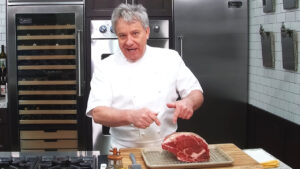
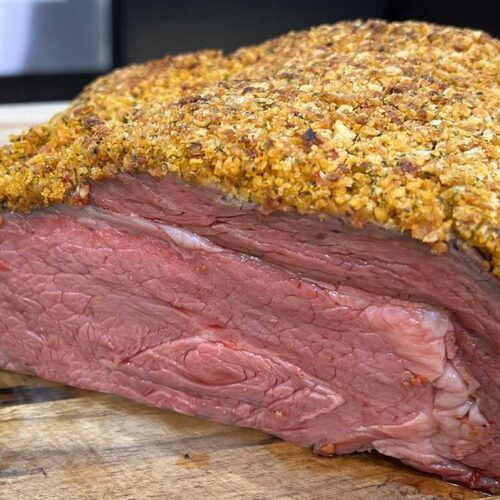
Prime Rib is one of the most delicious and impressive pieces of meat you can cook. Especially when using the right Prime Rib Recipe! Perfect for holiday gatherings or special occasions.
Prime Rib is a large cut of beef that comes from the rib section of the animal. It’s well-marbled with fat, which makes it extremely flavorful and juicy.
Prime Rib recipes usually call for it to be roasted in an oven, but it can also be grilled or smoked. When cooked properly, Prime Rib is tender and juicy with a crispy outer crust. If you’re new to cooking Prime Rib, don’t worry – I’m going to show you how to prepare the perfect Prime Rib recipe.
But first, you’ll need to choose the right cut of meat.
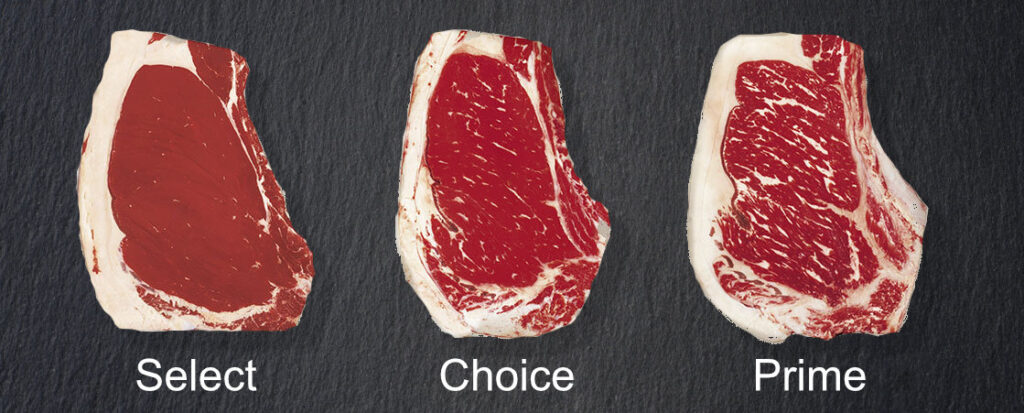
When purchasing a Prime Rib, you may be given the option of choosing between Prime and Choice. Prime is a little harder to find, so you may only have the option of Choice. But not to worry, either one is a great piece of meat. Just be sure to choose a cut that is well-marbled with fat. This will ensure the meat is juicy and flavorful.
But what is the difference? Prime beef is considered to be the highest quality, with well-marbled meat that is tender and juicy. Choice beef is also of good quality, but it has slightly less marbling than Prime. Prime beef will typically cost more than Choice, but it may be worth the investment if you are looking for an especially tender and flavorful roast.
However, when making the decision of either Prime or Choice it’s also important to know how much you should buy. The rule of thumb is 1 pound per person for bone-in Prime Rib and 1/2 – 3/4 pounds per person for boneless Prime Rib. This will ensure that there’s enough for everyone to enjoy seconds (or thirds!)
And of course, leftovers are always a bonus. So, when in doubt, err on the side of buying too much rather than too little. After all, Prime Rib is just as good, if not better the next day. Just be sure to have plenty of horseradish cream on hand to complete the perfect meal!
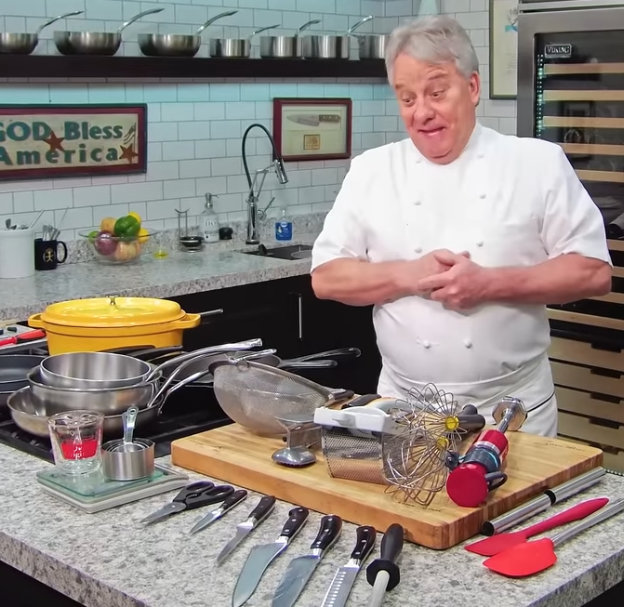
Essential Tools for Cooking Prime Rib Success
Before we get to the cooking process, let’s ensure you have the right tools. Here’s what you’ll need:
Roasting Pan: Essential for even cooking and catching those flavorful drippings.
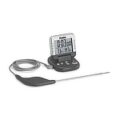
Meat Thermometer: To guarantee the perfect level of doneness. Trust me, guessing is not your friend here!
Wire Rack: Helps circulate heat evenly around the meat.
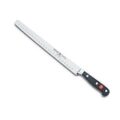
Sharp Knife: For slicing through that beautifully cooked prime rib like butter.
Kitchen Tongs: Handy for handling the roast without puncturing it.
Aluminum Foil: For resting the meat while retaining heat (even if, like me, you don’t love foil!).
Basting Brush: Perfect for applying clarified butter or oil for that golden-brown crust.
These tools will make your cooking process seamless and your prime rib absolutely mouthwatering.
Common Mistakes to Avoid
Cooking a prime rib roast isn’t complicated, but there are a few pitfalls to steer clear of:
Skipping the Thermometer: A thermometer is non-negotiable. Whether it’s bone-in or boneless, you need precise temperature readings for perfection.
Not Letting the Roast Rest: Resting allows the juices to redistribute, ensuring a tender and juicy roast.
Overcooking the Meat: Always aim for an internal temperature of 120°F for rare or 125°F for medium-rare. Remember, the roast will continue to cook while resting.
Using Fresh Herbs During Cooking: Fresh herbs burn at high temperatures. Stick to dried herbs like herbes de Provence.
Skipping the Dry Brine: Salting the raw roast 24 hours in advance enhances the flavor and creates a beautiful crust.
Searing at the Wrong Time: Avoid searing at the start. Instead, use the reverse sear method by cooking slowly at a low temperature and searing at the end for a perfect crust.
Selecting the Wrong Cut: Always choose a bone-in prime rib with ample marbling, preferably from the chuck end, as it tends to be more tender and flavorful.
Maximizing Natural Beef Flavor: Stick with oven roasting to enhance the natural beefiness of the prime rib, which also provides a crispier outer crust compared to smoking or grilling.
Follow my Prime Rib recipe and your friends and family will be impressed with your culinary skills - and they'll absolutely love this delicious piece of meat. Now, I know what you're thinking - how do I cook the Perfect Prime Rib? Well, then let’s get to it! I'm here to share my secret recipe with you all - the only real way to cook a Prime Rib.While it may seem like a complicated roast to cook, Prime Rib is actually quite simple to prepare. Just follow the few simple steps below and you'll be enjoying perfectly cooked Prime Rib in no time!So, let’s get cooking!
The Chef used a Choice 7 pounds Bone in, 3 bones, if you can find Prime that would be more delicious
2 to 3ouncesof Clarified Butter or Butter Olive Oil
2tablespoonsHerb De Provence of your favorite Dried Herb Blend
2 to 3ouncesSweet Butter to use to finish the cooking
Get Recipe Ingredients
Prevent your screen from going dark
Recipe Instructions
Salt and pepper the roast generously all over and place it on a rack on a cookie sheet in the fridge not covered for a few hours or as much as 48 to 72 hours.
When ready to cook Preheat Oven to 250ºF / 120ºC
Brush the Roast with Clarified Butter or Butter Olive Oil and rub some Herbs de Provence.Place on top of a rack on a cookie sheet. If you do not have a rack or a cookie sheet, add celery, carrot onion in the bottom of a roasting pan and bake the prime rib that way.
It took the Chef 3 ½ hours to cook the Roast to Rare to Medium Rare 120F/49C
Remove Roast from Oven and tent loosely with aluminum foil. Place in a warm spot in the kitchen and allow to rest for at least 45 minutes and up to 90 minutes. Meanwhile, Preheat Oven to highest possible temperature setting, 500 to 550°F / (260 to 288°C).
Cover the Roast with Butter (like the Chef did in the video)
Reheat the Roast for 10 to 15 minutes MAX.
At this point you do not need to let it rest before cutting it.
One of the simplest yet most impactful techniques is dry brining. Generously season your prime rib with salt and let it rest uncovered in the refrigerator for 24 hours. This process draws out moisture, which then reabsorbs, carrying the salt deep into the meat. The result? A deeply flavored, beautifully crusted roast. Remember to let the meat come to room temperature before roasting to ensure even cooking.
Mastering the Rest Time: Patience is Key
After roasting, let your prime rib rest for 30-45 minutes. Cover it loosely with foil (but don’t seal it) to keep it warm. This resting period allows the juices to be redistributed, making every slice tender and juicy. Cutting into the roast too soon releases those precious juices, leaving you with a dry cut of beef. Patience is key here, my friends!
Bonus Pro-Tip: Always Use a Meat Thermometer
To achieve the perfect doneness, I recommend using a meat thermometer. Insert the thermometer into the thickest part of the roast, avoiding bone. For a medium rare roast, aim for an internal temperature of 120°F before resting. This tool takes the guesswork out of cooking and guarantees a beautifully cooked prime rib every time.
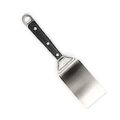
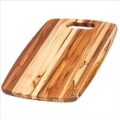
Equipment - You can find the items below at our online store!
A prime rib deserves equally spectacular accompaniments. Here are five side dishes from my website that will take your meal to the next level:
Asparagus Tips Light, fresh, and perfectly tender, these asparagus tips bring a delightful balance to the richness of prime rib. The subtle crunch and vibrant green color add both texture and visual appeal to your plate.
Green Beans Almondine These tender green beans are paired with toasted almonds, adding a delightful crunch and nutty flavor. The freshness of the green beans balances the richness of the prime rib, while the almonds bring a touch of elegance and texture to your plate.
Potatoes Au Gratin Creamy, cheesy, and absolutely decadent, this dish pairs beautifully with prime rib. The velvety texture of the potatoes harmonizes with the tender beef, creating a luxurious dining experience.
Garlic Mashed Potatoes These creamy mashed potatoes are the perfect canvas for the rich au jus from your prime rib roast. The garlic flavor enhances the savory notes of the beef, making every bite a harmonious delight.
Stuffed Onion – Using a Sweet Vidalia Onion These stuffed onions, featuring sweet Vidalia varieties, are filled with a savory stuffing that perfectly complements the flavors of the prime rib. The sweetness of the onion balances the robust beef, while the stuffing adds an extra layer of flavor and texture.
What wines should you serve with Prime rib?
Prime rib is a classic and it pairs well with a variety of wines. For a traditional pairing, try serving it with a rich red wine like Cabernet Sauvignon or Merlot. These wines have bold flavors that can stand up to the rich, succulent flavor of the meat, and pair nicely.
If you prefer white wine, try pairing it with a Chardonnay or Sauvignon Blanc. These wines are creamy and full-bodied, and they can help to accentuate the taste of your roast.
Of course, if you are serving Prime Rib on a special occasion, you can’t go wrong with pairing it with sparkling wine or Champagne. This is also a good pairing if you’re serving it for brunch. The bubbles in these wines will help to cut through the richness of the meat.
Whatever wine you choose, be sure to serve it at the proper temperature. Red wine should be served at room temperature, while white wine should be chilled. By following these simple guidelines, you can ensure that your Prime Rib dinner is a truly memorable occasion.
So, what can you do with Prime Rib leftovers?
If you’re lucky enough to have leftovers, there are a number of things you can do to make the most of them. You are only limited by your imagination!
First, try slicing the meat thinly and using it in a sandwich. The rich flavor of the meat pairs well with a variety of toppings, from sharp cheddar cheese to creamy horseradish sauce. Not only is this an awesome sandwich on its own, but you can take it to the next level by grilling the sandwich. You can’t beat a grilled cheese sandwich with sliced Prime Rib.
Alternatively, you could dice the roast and use it as a topping for a savory omelet. Another great way to enjoy the leftovers is to cube the meat and use it in a hearty chili. And of course, you can also top your favorite salad with sliced Prime Rib. Yum!
The possibilities are endless!
What is the best way to store Prime Rib leftovers?
So, you’ve cooked your roast and now you’re faced with the question of how to store the leftovers. Here are a few tips for storing Prime Rib leftovers so they stay fresh and delicious so you can continue to enjoy them for days to come!
First, slice the meat into thin strips or small chunks. This will help to keep the juices locked in, and help it to reheat evenly, making for tastier leftovers. Once you’ve carved off the slices you want, place the meat in an airtight container or wrap it tightly in plastic wrap and store it in the fridge.
If you want to freeze it, wrap it tightly in freezer-safe paper or plastic. Again, be sure to label the package with the date. When you’re ready to enjoy the Prime Rib again, simply thaw it in the refrigerator
When you’re ready to reheat, simply remove the wrappings and place the Prime Rib on a baking sheet. Then, cover loosely with foil and heat at a low temperature until warmed through. And then enjoy!
Frequently Asked Questions About How To Cook The Perfect Prime Rib
1. What is reverse searing, and why is it important for cooking prime rib?
Reverse searing involves cooking the meat slowly at a low temperature before searing it at a high temperature. This technique ensures even cooking from edge to center, preventing the common issue of a gray, overcooked outer layer with a rare center. By cooking the prime rib slowly at 250°F until it reaches the desired internal temperature, the meat cooks uniformly.
The final high-temperature sear creates a delicious crust without overcooking the interior, resulting in a juicy and tender prime rib.
2. How do I select the best cut of prime rib?
When selecting a prime rib, look for a cut with ample marbling, as the fat within the meat ensures flavor and tenderness. Ideally, choose a prime grade cut, though choice grade can also yield excellent results. Additionally, opting for the chuck end of the rib roast, which contains more marbling and is generally more tender and flavorful, is recommended.
This part is slightly smaller on one end and delivers a superior taste and texture compared to other sections.
3. How long should I dry brine my prime rib, and what are the benefits?
Dry brining your prime rib for 24 hours is ideal, but if time is limited, a minimum of 3 to 4 hours will suffice. Dry brining involves coating the meat with salt and allowing it to rest uncovered in the refrigerator. This process enhances the flavor by allowing the salt to penetrate the meat fully. It also helps dry out the surface, leading to a better crust when the meat is seared.
The result is a more flavorful and evenly seasoned prime rib.
4. What is the best way to season a prime rib?
Seasoning a prime rib is straightforward yet crucial. Generously rub the entire surface with kosher salt and freshly ground black pepper. For additional flavor, you can brush the meat with clarified butter or avocado oil and sprinkle it with dried herbs such as herbes de Provence. Avoid using fresh herbs, as they tend to burn during cooking.
Proper seasoning enhances the meat’s natural flavors and contributes to a delectable crust.
5. Why is it important to cook prime rib at a low temperature initially?
Cooking prime rib at a low temperature, such as 250°F, ensures that the meat cooks evenly from edge to center. This slow and steady approach prevents the outer layers from overcooking while the interior reaches the desired doneness. It also allows the meat to retain its moisture, resulting in a tender and juicy prime rib.
Low-temperature cooking is key to achieving a uniform medium-rare or rare roast, with no gray bands of overcooked meat.
6. How do I correctly use a meat thermometer when cooking prime rib?
Insert the meat thermometer into the thickest part of the roast, avoiding contact with bone or fat, which can skew the reading. Set the thermometer to alert you when the internal temperature reaches 120°F for medium-rare. This ensures the meat is cooked perfectly without overcooking. Using a meat thermometer eliminates guesswork and guarantees precise results, providing a perfectly cooked prime rib with consistent doneness throughout.
7. What should I do if I don’t have clarified butter for basting the prime rib?
If clarified butter is unavailable, avocado oil is an excellent substitute. Both have high smoke points, making them suitable for cooking at higher temperatures. Basting the prime rib with a small amount of either will help the herbs adhere to the meat and contribute to a beautiful crust.
Using a fat with a high smoke point ensures the seasoning stays intact and the meat browns evenly without burning.
8. How long should I let the prime rib rest after cooking, and why?
Allow the prime rib to rest for 45 minutes to an hour after removing it from the oven. Resting lets the juices redistribute throughout the meat, ensuring every slice is juicy and flavorful. Cutting into the meat too soon can cause the juices to escape, resulting in a drier roast. Proper resting is essential for maintaining moisture and enhancing the overall eating experience.
9. Why is it necessary to sear the prime rib at a high temperature at the end of cooking?
Searing the prime rib at a high temperature, such as 500°F, for 10-15 minutes at the end of cooking creates a flavorful, caramelized crust. This final step enhances the meat’s texture and appearance, providing a satisfying contrast to the tender interior. The high heat also helps lock in the juices, ensuring the roast remains moist and succulent.
This technique is the key to achieving a restaurant-quality prime rib at home.
10. What is the significance of the internal temperature when cooking prime rib?
Monitoring the internal temperature is crucial for achieving the desired level of doneness. For a medium-rare prime rib, aim for an internal temperature of 120°F before resting. The meat will continue to cook slightly as it rests, reaching the perfect medium-rare temperature. Adjust the target temperature according to your preference, but be cautious not to overcook, as this can result in a less tender and juicy roast.
11. Can I use fresh herbs when seasoning prime rib?
Fresh herbs are not recommended for seasoning prime rib before cooking, as they tend to burn and lose their flavor at high temperatures. Instead, use dried herbs like herbes de Provence, which can withstand the cooking process and impart a rich, aromatic flavor. Fresh herbs can be added after cooking or used as a garnish to enhance the final presentation without risking the burnt taste.
12. What should I do if my prime rib is not available in prime grade?
If prime grade prime rib is unavailable, choice grade is a suitable alternative. Look for a cut with good marbling, as the fat within the meat enhances flavor and tenderness. While prime grade offers superior marbling and richness, a well-marbled choice grade roast can still deliver excellent results with proper cooking techniques and seasoning.
13. How do I ensure my prime rib is evenly cooked?
Even cooking is achieved through the reverse searing method, which involves cooking the meat slowly at a low temperature before searing it at high heat. Using a meat thermometer to monitor the internal temperature ensures precision. Additionally, allowing the roast to rest after cooking helps redistribute the juices, contributing to uniform doneness and moisture throughout the meat.
14. What is the best way to carve a prime rib?
To carve a prime rib, first remove the bones by running a sharp knife along the bone, following its contours to separate it from the meat. Then, slice the roast into thick slices, about three-quarters to one inch, depending on your preference. Carving against the grain ensures tender slices. Serving the meat with a flavorful au jus or horseradish sauce enhances the dining experience.
15. How do I store leftover prime rib?
Store leftover prime rib by wrapping it tightly in aluminum foil or plastic wrap and refrigerating it within two hours of cooking. Properly stored, it can last for 3 to 5 days in the refrigerator. For longer storage, place the wrapped meat in an airtight container and freeze it for up to three months. To reheat, gently warm the slices in a low oven or a covered skillet to retain moisture.
16. What side dishes pair well with prime rib?
Prime rib pairs wonderfully with a variety of side dishes, including roasted vegetables, garlic mashed potatoes, and Yorkshire pudding. Classic accompaniments like creamy horseradish sauce or rich au jus enhance the meat’s flavor. For a complete meal, consider serving with a fresh green salad, crusty bread, and a robust red wine, such as Cabernet Sauvignon or Merlot.
17. How do I make a flavorful au jus for prime rib?
To make a flavorful au jus, deglaze the roasting pan with beef broth or red wine, scraping up any browned bits from the bottom. Simmer the mixture to reduce and concentrate the flavors. Strain the liquid and season with salt and pepper to taste. Adding a splash of Worcestershire sauce or a dash of soy sauce can enhance the depth of flavor, resulting in a rich, savory au jus.
18. What is the difference between a rib roast and a prime rib?
The terms “rib roast” and “prime rib” are often used interchangeably, but there are slight differences. Prime rib refers to a standing rib roast from the primal rib section, typically roasted bone-in and often graded as “prime” by the USDA. A rib roast can come from the same section but may not always be prime grade. Both cuts are excellent for roasting, but prime rib is considered the more premium option.
19. How do I make a horseradish sauce to accompany prime rib?
To make a classic horseradish sauce, combine 1 cup of sour cream with 2-3 tablespoons of prepared horseradish, 1 tablespoon of Dijon mustard, and a splash of lemon juice. Season with salt and pepper to taste. Adjust the amount of horseradish based on your preferred level of heat. This tangy, creamy sauce complements the rich flavor of prime rib, adding a zesty kick to each bite.
For an extra touch, you can add a tablespoon of chopped fresh chives or parsley for color and freshness. Allow the sauce to sit in the refrigerator for at least 30 minutes before serving to let the flavors meld together. This versatile sauce not only pairs well with prime rib but can also be used as a spread for sandwiches or a dip for vegetables.
20. Why is it important to let the prime rib rest before carving?
Resting the prime rib before carving allows the juices to redistribute throughout the meat, ensuring every slice is moist and flavorful. Cutting into the roast too soon can cause the juices to run out, leading to a drier texture. Resting also helps the meat reach its final internal temperature, completing the cooking process and enhancing the overall tenderness and taste.
During the resting period, cover the roast loosely with aluminum foil to retain warmth without trapping steam, which can soften the crust. This crucial step can make a significant difference in the quality of your prime rib, providing a succulent and evenly cooked roast that will impress your guests.
Chef Jean-Pierre, born in Aix-en-Provence, France, honed his culinary skills at a young age, mastering the art of charcuterie by the age of twelve. Determined to become a chef, he began his formal apprenticeship at L'Oustau de Baumaniere in Provence, one of the world’s best restaurants with a 3-star Michelin rating.
Jean-Pierre continued his apprenticeship on the French Riviera where he worked at famous restaurants, such as L’Oasis at La Napoule, Le Vendome in Aix-en-Provence, and the the Carlton in Cannes. In 1976, he opened The Left Bank Restaurant, consistently recognized as one of the best in America for 22 years by magazines like "Bon Appetit," "Conde Nast," "Gourmet Magazine" and "Travel & Leisure."
Jean-Pierre was also a popular TV personality, having hosted National Public Television series like "Incredible Cuisine” and "Sunshine Cuisine." He was also nominated for "Best Culinary Video" by the James Beard Foundation and operated the nationally renowned “Chef Jean-Pierre's Cooking School” and was a sought-after guest on shows like "The Today Show" and "Larry King Live."
With over 1.8 Million Subscribers to his Chef Jean-Pierre YouTube Channel, he is a widely respected figure in the culinary world, known for his skill and dedication to his craft, but even more so known for making gourmet cooking fun and easy to learn.
I have tried every recipe known to man and this one is incredible; it is perfection. So easy. Jean Pierre is now my favorite chef for this recipe and other recipes of his. Thank you so much!
Rachyl
on March 30, 2024 at 5:15 pm
Hi, can I ask if you cook this on convection bake or regular bake or does it matter? We cooked ours on convection bake and it was done sooner than expected, given its large size (over 8lbs). I did turn the temp down part way through to adjust for the convection, in case that was an issue but I started to wonder if standard bake mode would be better for this dish? I know usually the warm air circulating is a benefit. Any thoughts? Thanks so much! This is the BEST way to cook almost any roast. So grateful we found it. It takes away the issue I hate – where letting a roast “rest” ends up with it being served warm instead of hot. This is genius!
Lisa Low
on March 29, 2024 at 9:27 pm
I have cooked prime rib for many years with the hot oven method. About two years ago, I saw your method of the reverse sear and low and slow cooking. I much prefer the tenderness and the control over the doneness with your method. I made this for NYE one year and there wasn’t a morsel left! Thank you, Chef for your channel. I have learned so very much from you. Sending a hug!
Bob
on December 27, 2023 at 11:22 am
My oven (Maytag) does convection as well as bake. Should I use the convection roast setting at 250 degrees or should I use the bake setting at 250 degrees. If convection, should the temp be reduced further?
Made this for Christmas dinner and it came out perfect! I used a convection oven at 225 degrees F for about 3 hours for a 6 1/2 lb. 3-rib roast. When I checked the internal temperature, it was 125 degrees F, so a little over. Not to worry it was fine. The recipe is so simple and foolproof. This is why I like recipes from real chefs!
Teresa Konczalla
on December 25, 2023 at 7:48 pm
5 stars all the way! I fix Prime Rib every year for Christmas and this year I found your recipe. This was so simple and there was no guessing if the meat was done – it was perfect.
Scott
on December 22, 2023 at 6:54 pm
I hope you see this comment Chef JP!!!! I am using your recipe tomorrow for my party of 16. I have 2 separate pieces one is 8.0 and the other 9.0 pounds. Can i cook them in the same large roasting pan side by side? should I could them bone side up or down? And how long should I cook this for? Should the cook time be based on the total 17 pound size or based on the largest size? Should I put in both roasts at the same time and cook then for the same time even though they are 1 pound different weight?
Rob
on December 21, 2023 at 7:48 pm
I am cooking a 5.5 AND a 5.1 pound rib roast ( instead of one 10.5 roast). How do I calculate the time?
Kelli
on December 21, 2023 at 12:53 pm
Planning on cooking a boneless 12lb prime rib. By my calculations that means about six hours in the oven. Does that sound right?
Hi Chef, I just saw your Video and will be trying your way for Christmas. I have a 12Lb Rib Roast and I have always put garlic and rosemary on my roast will this not do well if added in the low heat method , also can I use garlic infused oil on my roast. Love how you make it seem so easy
Michelle
on December 17, 2023 at 3:33 pm
Hi chef- if I have a 13 pound roast…about how long to cook?
Thank you
Elena Guerra
on December 4, 2023 at 3:30 pm
Hi, I will be trying this wonderful recipe for christmas, I have two questions, I live in France, what cut of meat do you recommend??
And could I cook it so it is ready a couple of hours before dinner and then just put it in the oven for the 15 minutes before eating??
Thank you very much and have a wonderful christmas
Tom
on September 11, 2023 at 1:32 pm
Best prime rib recipe….. period. So many recipes over-complicate a simple dish like this.
Low-ish and slow-ish and the sitting overnight (or two days) prevents those bites of crust with salt crystals and lets the salt work it’s way in to do it’s magic. Perfect recipe and perfect taste and texture when it’s done. Thanks!!!
Love your videos btw.
Karen
on December 17, 2023 at 8:06 pm
Just wondering if the oven is set for convection or just regular?
Joe Cohen
on December 30, 2023 at 5:43 pm
Chef Pierre is a delight to watch. He breaks down the process so anybody can cook like a pro. The rib roast recipe, with the herbs de Provence was very tasty, but the internal cooking temperature of 120 resulted in a roast that was more medium to medium rare and not as rare as I had hoped. Next time, I’ll know to remove it at 110. Thank you chef Pierre.
Lori
on April 9, 2023 at 10:26 am
After the roast is in the refrigerator overnight, does it need to sit out before cooking?
Chef Jean-Pierre
on April 16, 2023 at 5:50 pm
Not necessary! 😊
Jo
on March 30, 2023 at 9:05 pm
Best recipe ever this will be my third times making it. Thanks Chef for the detailed instruction of the recipes and the video.
Nancy
on February 27, 2023 at 4:01 pm
This is the best way to cook it. I have always started out at a high temp for about 10 minutes then down to 250 until it’s rare. But I like this way better and will try. Just picked up my cow that had been butchered – can’t wait to get at one of these. It is the BEST cut of beef, I could eat it every day.
Greg
on January 9, 2023 at 12:38 pm
Made this for Christmas dinner, came out perfect. Thank you for making easy to follow directions and giving me the confidence to try this.
Brent McIntosh
on January 5, 2023 at 8:52 pm
I let my roast dry brine for 72 hours.I made this two days ago cooking it to 130, and letting it rest for 90 minutes.
It was so juicy and moist! Thanks for sharing your knowledge and tips with us Chef! It’s greatly appreciated!
Chef Jean-Pierre
on January 11, 2023 at 9:55 pm
So glad it worked beautifully for you! 😊
Donna
on January 4, 2023 at 2:01 pm
I am making this roast today. Was just wondering what rack is it cooked on in the oven ? It looks like you were cooking on the lowest rack. Just wanted to do it the way you did. Love watching you Chef ❤🤗
Chef Jean-Pierre
on January 5, 2023 at 2:34 pm
The lowest rack is perfect! 😊
Kris
on January 2, 2023 at 7:12 pm
Made this for New Year’s Day dinner. I was nervous because I haven’t had much luck with prime ribs in the past. I followed your recipe and watched the video several times. it came out great, my husband was impressed.
Chef Jean-Pierre
on January 2, 2023 at 7:31 pm
Awesome and congratulations! 😊
AA E
on December 26, 2022 at 4:38 pm
I’ve been making prime rib (or really, a standing rib roast) for years. Have used a salt crust, high heat roast start, sear and low roast…and they all were *good*, but not great. THIS RECIPE MAKES A GREAT ROAST. We used a three-bone, 6.4 lbs chuck end standing roast. Used a metal rack in an aluminum roasting pan. Did not use herbs, since I wanted to see if this was good before adding yet another change. Also, the meat was grassfed and pasture finished. Man oh man, it was tender, with perfect maillard effect (after the second roast with the butter). Next day: carved a couple thin slices and crusted them in the fat from the first day, saved from the bottom of the roasting pan. Yet another day of meat heaven. Thanks a million, JP!
AA E
on December 26, 2022 at 4:40 pm
Oh, and Chef, your horseradish sauce…WOW, just wow. Have been making that for years, but nothing was as good as that. I can imagine it loaded with cracked black pepper and some grated reggiano parmigiano for a great burger topper.
Chef Jean-Pierre
on December 26, 2022 at 8:48 pm
Awesome! So glad you enjoyed the recipes! 😊
Valerie
on December 26, 2022 at 4:28 pm
This looks amazing. I NEED to know info about your Herbs de Provence dispenser. It’s fantastic! I could listen to you cook all day long! I already have my prime rib on my rotisserie but I will try this with the prime rib I’m making next week.
After all these years I finally have found the perfect, foolproof directions for a stress free standing rib roast. No basting, no constantly checking the temperature, no worries if it cooked to early or too late. I sat in the living room in front of the fire with my guests and totally enjoyed the day. THANK YOU!!!!
Chef Jean-Pierre
on December 26, 2022 at 8:53 pm
Bravo! That is the way to do it! 🙂
Michael Munson
on December 25, 2022 at 7:39 pm
Fantastic, Chef JP!!
Pulled at 125 and gave it an extra long rest since I misjudged estimated cook time, and dealing with a 2 bone.
It peaked at 130 tented and when it got back to 125 I put it back in the oven to hold temp, still tented. It made it back to 126 before I pulled it out to do the run up sear.
A short 10 minutes later I had a perfect medium rare to almost medium.
When you say a child can do it, your not kidding! I’m way too old to be a child, but I do cook like one.
When and if I grow up I want to be able to cook at your level.. Ok, I’ll settle for half as good. Until then I’ll continue to watch and try to learn. I guess you did teach this old dog a new trick. Thank you!
Chef Jean-Pierre
on December 26, 2022 at 8:55 pm
Thank you for the kind words! It is comments like yours that keep us motivated to produce great content! Godspeed!
Colleen
on December 25, 2022 at 7:22 pm
Made this for dinner tonight! Best prime rib roast ever! My adult children could not stop talking about how delicious it was! I have deleted other prime rib recipes and bookmarked this one! Thank you so much! Perfect!!
Chef Jean-Pierre
on December 26, 2022 at 8:56 pm
Awesome! So glad you enjoyed the recipes! 😊
Robin
on December 25, 2022 at 7:16 pm
I just cooked my first standing rib roast ever. Followed your directions and it turned out perfectly. I got rave reviews from my whole family. Thanks ever so much
Chef Jean-Pierre
on December 26, 2022 at 8:56 pm
Awesome! So glad you enjoyed the recipes! 😊
Vern
on December 25, 2022 at 5:45 pm
Thanks Chef JP!!!
Recently found your channel …Soooo glad we did!!
Made your prime rib and au jus recipe today. Thanks to you, that is now our GO TO way to cook our holiday roast 👍
Thank You so much …and we made sure to let our family know who deserves the credit !!!
BTW, we used your Garlic infused olive oil to sauté the onions – i could have eaten them right out of the pot, they smelled so good 🙂
Merry Christmas to you from our family to your family
Thanks again
Vern
Chef Jean-Pierre
on December 26, 2022 at 8:57 pm
We are glad you found us! Awesome! So glad you enjoyed the recipes! 😊
Chef Jean-Pierre
on December 24, 2022 at 6:06 pm
It should take about 4 hours to get to 120F internal temp. Be sure to check the inside temp after 3 hours!😊
phong vu
on December 24, 2022 at 5:29 pm
I Just made this dish for the first time ever and it was an instant hit. The only thing I did different was dry brine it for 60 hours. Took it out at 225 since my family like it closer to medium med-rare. We will be making this every year. Also, we made the Âu Ju using his beef stock recipe which is a must! Everyone also loved the horseradish sauce!!! TYSM!!!
Anh Nguyen
on December 24, 2022 at 4:44 pm
Thank you for sharing chef! Yours looks unresistable. I’m following your recipe for dinner tonight. Hope mine is as good as yours.
Susanne
on December 24, 2022 at 4:07 pm
Je adore! I have used this method for a year now, no other way compares! Jean Pierre, you have made preparing the feast fun again for this Grandmere. So much fun watching and listening to you cook. Thank you.
PAMALA
on December 24, 2022 at 1:43 pm
I will admit that I didn’t read through all of the comments, so if this question has already been answered I apologize.
Does the roast need to be brought up to room temp before cooking?
Chef Jean-Pierre
on December 24, 2022 at 5:56 pm
No need to! 😊
Suzanne Ferenczy
on December 25, 2022 at 3:18 pm
I didn’t see your recipe until AFTER I put my roast in at 500! Someone somewhere said 5 minutes per pound at 500 then turn oven off and do not open the door for 2 or 3 hours. “Perfect every time”. We shall see. 🙁
Nancy Stilwell
on December 24, 2022 at 1:40 pm
I’m making a 7 rib roast, and had the butcher cut it half, one 3 rib and one 4 rib. I can fit two roasting pans in my oven side by side. My question is, will the cooking time be the same for med-rare? Or will it take longer? So excited to try this reverse sear method!!
Thank you Chef!
Chef Jean-Pierre
on December 24, 2022 at 5:58 pm
It may take about 15% lounger cooking time. Be sure to check the inside temp for both roast!
Nancy Stilwell
on December 26, 2022 at 11:26 am
Both roasts came out perfectly!! Best prime rib we’ve ever made. We’ll definitely use this method from no on. Thank you Chef!!
Chef Jean-Pierre
on December 26, 2022 at 8:52 pm
Awesome! So glad you enjoyed the recipes! 😊
Desirée
on December 24, 2022 at 12:52 pm
Q. Do I really need clarified butter to brush on prior to baking or is regular melted butter ok or would olive oil be better?
Chef Jean-Pierre
on December 24, 2022 at 1:00 pm
Hi Desiree, either will work. I like clarified butter because of its flavor and it has a higher smoke point. But melted butter or virgin olive oil also works well.
Lee Vasquez
on December 24, 2022 at 11:28 am
There are so many ways to cook a prime rib but I keep coming back to Chef Jean Pierre’s method. Perfect pink from end to end every time! It has now become our Christmas favorite.
Chef Jean-Pierre
on December 24, 2022 at 12:21 pm
Thank you Lee!
Carol
on December 24, 2022 at 5:08 pm
Do I need to let the prime rib set out for two hours prior to cooking? Thanks
Bernie
on December 23, 2022 at 12:59 am
Going to try this for Christmas!
Chef Jean-Pierre
on December 24, 2022 at 12:37 pm
Thank you Bernie, Merry Christmas!
Carl
on December 20, 2022 at 4:10 pm
Chef what are you thoughts on pre roasting the rib bones then tying them back on for easier portioning? Also do you see any advantage to a 225 oven in terms of evenness?
I’m hungry just thinking about it 🙂
TK
on December 16, 2022 at 1:17 pm
Good afternoon, are you using salted or unsalted butter?
Chef Jean-Pierre
on December 26, 2022 at 9:12 pm
unsalted butter 🙂
Joyce
on November 25, 2022 at 10:02 am
I’ve made this two years in a row (Christmas last year and Thanksgiving this year) and it’s always turned out excellent. Really simple and easy to do. Very foolproof using a good thermometer. Searing at the end with the oven rather than on a skillet also reduces mess (and triggering the smoke alarm!). Thank you for sharing this method, Chef Jean Pierre!
Chef Jean-Pierre
on November 28, 2022 at 10:00 am
Thank you Joyce, this is one of my favorites as well!
Peggie
on January 1, 2023 at 8:30 am
Chef, we LOVE your recipes,this Thanksgiving I used your turkey recipe on a 20 lb turkey, I also made your turkey roulade recipe with chorizo stuffing, which was a Huge hit with the family along with your gravy recipe. I felt like a Michelin Chef 👍.
For this prime rib I want to make it today for New Years. My roast is prime boneless roast. Would this method work with boneless?
Thank you Chef for all your recipes and your wonderful teaching methods.
Chef Jean-Pierre
on January 2, 2023 at 3:13 pm
Thanks for the kind words! This method will work perfectly with boneless! 😊
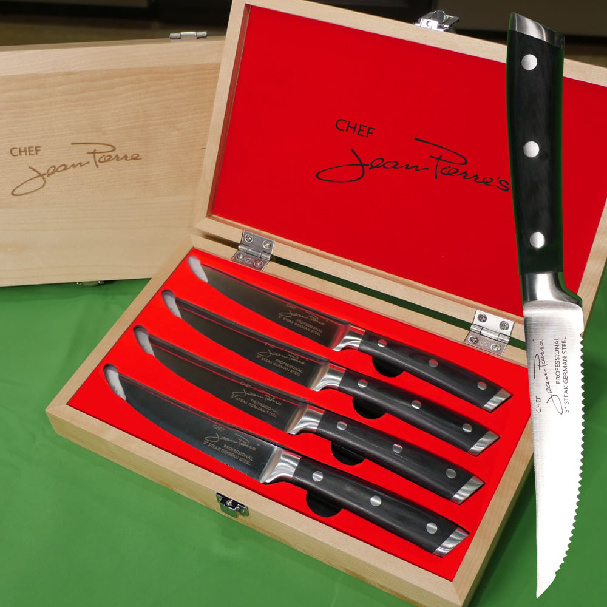
5-inch high-carbon German Stainless Steel blade will effortlessly slice through your steak, bread, vegetables, and fruits. The handle is ergonomically designed Pakka Wood. Makes a perfect gift presented in a beautifully crafted wooden box.


 Prime Rib is one of the most delicious and impressive pieces of meat you can cook. Especially when using the right Prime Rib Recipe! Perfect for holiday gatherings or special occasions.








I have tried every recipe known to man and this one is incredible; it is perfection. So easy. Jean Pierre is now my favorite chef for this recipe and other recipes of his. Thank you so much!
Hi, can I ask if you cook this on convection bake or regular bake or does it matter? We cooked ours on convection bake and it was done sooner than expected, given its large size (over 8lbs). I did turn the temp down part way through to adjust for the convection, in case that was an issue but I started to wonder if standard bake mode would be better for this dish? I know usually the warm air circulating is a benefit. Any thoughts? Thanks so much! This is the BEST way to cook almost any roast. So grateful we found it. It takes away the issue I hate – where letting a roast “rest” ends up with it being served warm instead of hot. This is genius!
I have cooked prime rib for many years with the hot oven method. About two years ago, I saw your method of the reverse sear and low and slow cooking. I much prefer the tenderness and the control over the doneness with your method. I made this for NYE one year and there wasn’t a morsel left! Thank you, Chef for your channel. I have learned so very much from you. Sending a hug!
My oven (Maytag) does convection as well as bake. Should I use the convection roast setting at 250 degrees or should I use the bake setting at 250 degrees. If convection, should the temp be reduced further?
Made this for Christmas dinner and it came out perfect! I used a convection oven at 225 degrees F for about 3 hours for a 6 1/2 lb. 3-rib roast. When I checked the internal temperature, it was 125 degrees F, so a little over. Not to worry it was fine. The recipe is so simple and foolproof. This is why I like recipes from real chefs!
5 stars all the way! I fix Prime Rib every year for Christmas and this year I found your recipe. This was so simple and there was no guessing if the meat was done – it was perfect.
I hope you see this comment Chef JP!!!! I am using your recipe tomorrow for my party of 16. I have 2 separate pieces one is 8.0 and the other 9.0 pounds. Can i cook them in the same large roasting pan side by side? should I could them bone side up or down? And how long should I cook this for? Should the cook time be based on the total 17 pound size or based on the largest size? Should I put in both roasts at the same time and cook then for the same time even though they are 1 pound different weight?
I am cooking a 5.5 AND a 5.1 pound rib roast ( instead of one 10.5 roast). How do I calculate the time?
Planning on cooking a boneless 12lb prime rib. By my calculations that means about six hours in the oven. Does that sound right?
Hi Chef, I just saw your Video and will be trying your way for Christmas. I have a 12Lb Rib Roast and I have always put garlic and rosemary on my roast will this not do well if added in the low heat method , also can I use garlic infused oil on my roast. Love how you make it seem so easy
Hi chef- if I have a 13 pound roast…about how long to cook?
Thank you
Hi, I will be trying this wonderful recipe for christmas, I have two questions, I live in France, what cut of meat do you recommend??
And could I cook it so it is ready a couple of hours before dinner and then just put it in the oven for the 15 minutes before eating??
Thank you very much and have a wonderful christmas
Best prime rib recipe….. period. So many recipes over-complicate a simple dish like this.
Low-ish and slow-ish and the sitting overnight (or two days) prevents those bites of crust with salt crystals and lets the salt work it’s way in to do it’s magic. Perfect recipe and perfect taste and texture when it’s done. Thanks!!!
Love your videos btw.
Just wondering if the oven is set for convection or just regular?
Chef Pierre is a delight to watch. He breaks down the process so anybody can cook like a pro. The rib roast recipe, with the herbs de Provence was very tasty, but the internal cooking temperature of 120 resulted in a roast that was more medium to medium rare and not as rare as I had hoped. Next time, I’ll know to remove it at 110. Thank you chef Pierre.
After the roast is in the refrigerator overnight, does it need to sit out before cooking?
Not necessary! 😊
Best recipe ever this will be my third times making it. Thanks Chef for the detailed instruction of the recipes and the video.
This is the best way to cook it. I have always started out at a high temp for about 10 minutes then down to 250 until it’s rare. But I like this way better and will try. Just picked up my cow that had been butchered – can’t wait to get at one of these. It is the BEST cut of beef, I could eat it every day.
Made this for Christmas dinner, came out perfect. Thank you for making easy to follow directions and giving me the confidence to try this.
I let my roast dry brine for 72 hours.I made this two days ago cooking it to 130, and letting it rest for 90 minutes.
It was so juicy and moist! Thanks for sharing your knowledge and tips with us Chef! It’s greatly appreciated!
So glad it worked beautifully for you! 😊
I am making this roast today. Was just wondering what rack is it cooked on in the oven ? It looks like you were cooking on the lowest rack. Just wanted to do it the way you did. Love watching you Chef ❤🤗
The lowest rack is perfect! 😊
Made this for New Year’s Day dinner. I was nervous because I haven’t had much luck with prime ribs in the past. I followed your recipe and watched the video several times. it came out great, my husband was impressed.
Awesome and congratulations! 😊
I’ve been making prime rib (or really, a standing rib roast) for years. Have used a salt crust, high heat roast start, sear and low roast…and they all were *good*, but not great. THIS RECIPE MAKES A GREAT ROAST. We used a three-bone, 6.4 lbs chuck end standing roast. Used a metal rack in an aluminum roasting pan. Did not use herbs, since I wanted to see if this was good before adding yet another change. Also, the meat was grassfed and pasture finished. Man oh man, it was tender, with perfect maillard effect (after the second roast with the butter). Next day: carved a couple thin slices and crusted them in the fat from the first day, saved from the bottom of the roasting pan. Yet another day of meat heaven. Thanks a million, JP!
Oh, and Chef, your horseradish sauce…WOW, just wow. Have been making that for years, but nothing was as good as that. I can imagine it loaded with cracked black pepper and some grated reggiano parmigiano for a great burger topper.
Awesome! So glad you enjoyed the recipes! 😊
This looks amazing. I NEED to know info about your Herbs de Provence dispenser. It’s fantastic! I could listen to you cook all day long! I already have my prime rib on my rotisserie but I will try this with the prime rib I’m making next week.
This is the dispenser the chef use. You can find a few stores selling the same online. Good luck and Bob Appetit!
https://provencekitchen.net/product/spice-grinder-herbs-de-provence-olive-wood/
After all these years I finally have found the perfect, foolproof directions for a stress free standing rib roast. No basting, no constantly checking the temperature, no worries if it cooked to early or too late. I sat in the living room in front of the fire with my guests and totally enjoyed the day. THANK YOU!!!!
Bravo! That is the way to do it! 🙂
Fantastic, Chef JP!!
Pulled at 125 and gave it an extra long rest since I misjudged estimated cook time, and dealing with a 2 bone.
It peaked at 130 tented and when it got back to 125 I put it back in the oven to hold temp, still tented. It made it back to 126 before I pulled it out to do the run up sear.
A short 10 minutes later I had a perfect medium rare to almost medium.
When you say a child can do it, your not kidding! I’m way too old to be a child, but I do cook like one.
When and if I grow up I want to be able to cook at your level.. Ok, I’ll settle for half as good. Until then I’ll continue to watch and try to learn. I guess you did teach this old dog a new trick. Thank you!
Thank you for the kind words! It is comments like yours that keep us motivated to produce great content! Godspeed!
Made this for dinner tonight! Best prime rib roast ever! My adult children could not stop talking about how delicious it was! I have deleted other prime rib recipes and bookmarked this one! Thank you so much! Perfect!!
Awesome! So glad you enjoyed the recipes! 😊
I just cooked my first standing rib roast ever. Followed your directions and it turned out perfectly. I got rave reviews from my whole family. Thanks ever so much
Awesome! So glad you enjoyed the recipes! 😊
Thanks Chef JP!!!
Recently found your channel …Soooo glad we did!!
Made your prime rib and au jus recipe today. Thanks to you, that is now our GO TO way to cook our holiday roast 👍
Thank You so much …and we made sure to let our family know who deserves the credit !!!
BTW, we used your Garlic infused olive oil to sauté the onions – i could have eaten them right out of the pot, they smelled so good 🙂
Merry Christmas to you from our family to your family
Thanks again
Vern
We are glad you found us! Awesome! So glad you enjoyed the recipes! 😊
It should take about 4 hours to get to 120F internal temp. Be sure to check the inside temp after 3 hours!😊
I Just made this dish for the first time ever and it was an instant hit. The only thing I did different was dry brine it for 60 hours. Took it out at 225 since my family like it closer to medium med-rare. We will be making this every year. Also, we made the Âu Ju using his beef stock recipe which is a must! Everyone also loved the horseradish sauce!!! TYSM!!!
Thank you for sharing chef! Yours looks unresistable. I’m following your recipe for dinner tonight. Hope mine is as good as yours.
Je adore! I have used this method for a year now, no other way compares! Jean Pierre, you have made preparing the feast fun again for this Grandmere. So much fun watching and listening to you cook. Thank you.
I will admit that I didn’t read through all of the comments, so if this question has already been answered I apologize.
Does the roast need to be brought up to room temp before cooking?
No need to! 😊
I didn’t see your recipe until AFTER I put my roast in at 500! Someone somewhere said 5 minutes per pound at 500 then turn oven off and do not open the door for 2 or 3 hours. “Perfect every time”. We shall see. 🙁
I’m making a 7 rib roast, and had the butcher cut it half, one 3 rib and one 4 rib. I can fit two roasting pans in my oven side by side. My question is, will the cooking time be the same for med-rare? Or will it take longer? So excited to try this reverse sear method!!
Thank you Chef!
It may take about 15% lounger cooking time. Be sure to check the inside temp for both roast!
Both roasts came out perfectly!! Best prime rib we’ve ever made. We’ll definitely use this method from no on. Thank you Chef!!
Awesome! So glad you enjoyed the recipes! 😊
Q. Do I really need clarified butter to brush on prior to baking or is regular melted butter ok or would olive oil be better?
Hi Desiree, either will work. I like clarified butter because of its flavor and it has a higher smoke point. But melted butter or virgin olive oil also works well.
There are so many ways to cook a prime rib but I keep coming back to Chef Jean Pierre’s method. Perfect pink from end to end every time! It has now become our Christmas favorite.
Thank you Lee!
Do I need to let the prime rib set out for two hours prior to cooking? Thanks
Going to try this for Christmas!
Thank you Bernie, Merry Christmas!
Chef what are you thoughts on pre roasting the rib bones then tying them back on for easier portioning? Also do you see any advantage to a 225 oven in terms of evenness?
I’m hungry just thinking about it 🙂
Good afternoon, are you using salted or unsalted butter?
unsalted butter 🙂
I’ve made this two years in a row (Christmas last year and Thanksgiving this year) and it’s always turned out excellent. Really simple and easy to do. Very foolproof using a good thermometer. Searing at the end with the oven rather than on a skillet also reduces mess (and triggering the smoke alarm!). Thank you for sharing this method, Chef Jean Pierre!
Thank you Joyce, this is one of my favorites as well!
Chef, we LOVE your recipes,this Thanksgiving I used your turkey recipe on a 20 lb turkey, I also made your turkey roulade recipe with chorizo stuffing, which was a Huge hit with the family along with your gravy recipe. I felt like a Michelin Chef 👍.
For this prime rib I want to make it today for New Years. My roast is prime boneless roast. Would this method work with boneless?
Thank you Chef for all your recipes and your wonderful teaching methods.
Thanks for the kind words! This method will work perfectly with boneless! 😊