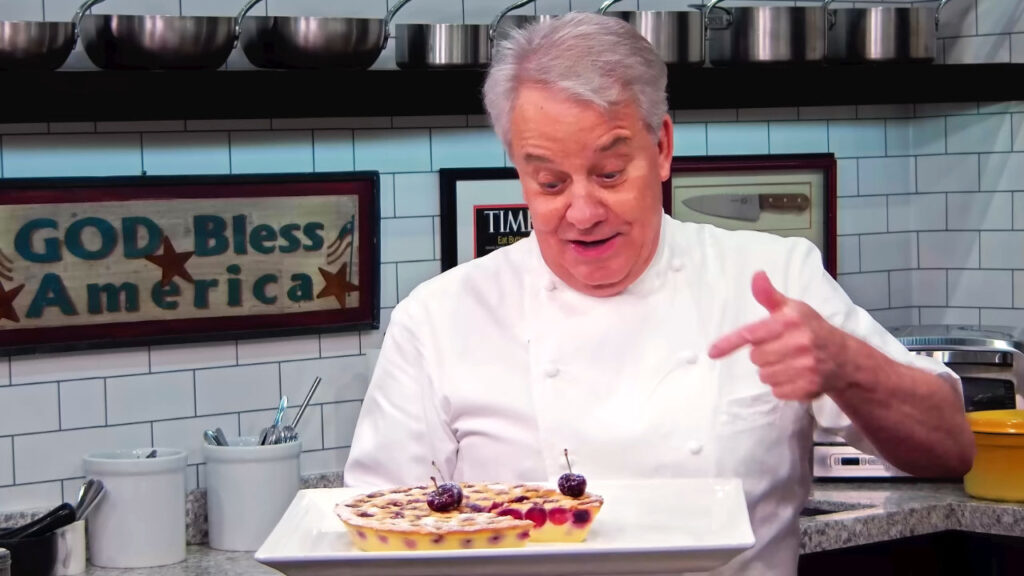
Hello friends…by now you know how much I love desserts, right? Well, this one, this Cherry Clafoutis Recipe, it’s like the unicorn of French desserts: rare, beautiful, and surprisingly easy to make in your own kitchen.
If you’re someone who thinks baking is reserved for pastry chefs and weekend warriors with too much time on their hands, let me stop you right there. Cherry Clafoutis is the kind of dessert even a 4-year-old can help make. Just supervise them around the mixer, okay? It’s like a custard pie had a love affair with a flan and decided to skip the crust. Boom. Instant joy.
So, What Is Cherry Clafoutis?
Cherry Clafoutis (or as we say in France, Clafoutis aux Cerises) is a traditional French dessert originating from the Limousin region.
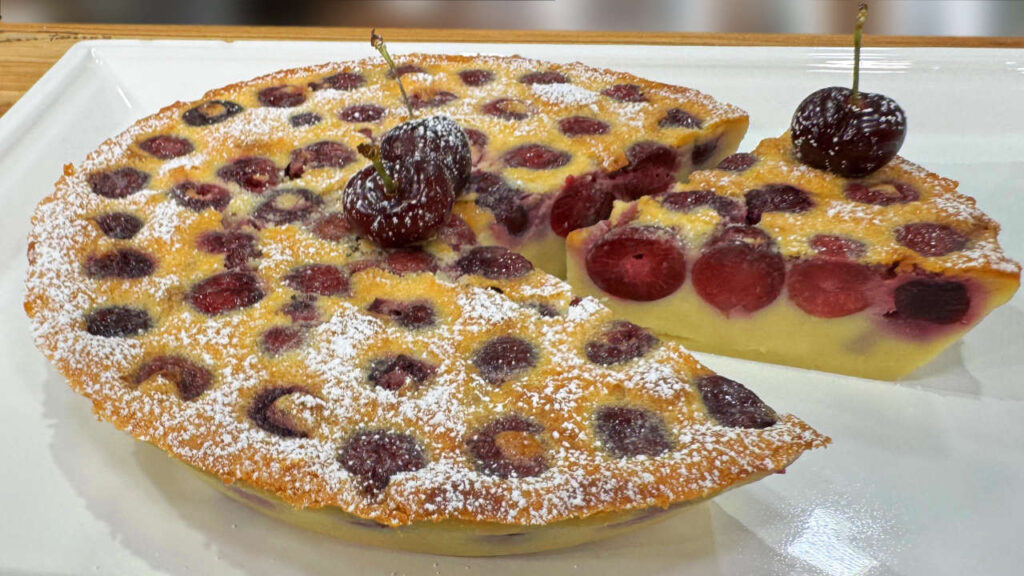
Clafoutis—pronounced cla-foo-TEE—is a traditional French dessert from the Limousin region. It’s made by baking juicy cherries—and yes, traditionally with the pits still in (I highly do not recommend this, especially if you want to keep all your teeth!) —in a simple, eggy custard batter that’s kind of like a flan and a pancake had a baby. It puffs up like a soufflé, browns beautifully on top, and settles into this glorious, silky, tender texture when it cools.
There’s no dough, no crust, nothing complicated. You just pour the batter over the cherries, bake it, let it set, and voilà! You have yourself a dessert that looks like it took all day—but really, a 4 year old could pull it off.
Oh, and it’s served warm or cold, with a little powdered sugar on top, maybe a dollop of whipped cream or crème anglaise on the side. It’s custardy, eggy, fruity, and fantastic.
C’est magnifique!
Essential Tools You’ll Need to Make Cherry Clafoutis
Cherry Pitter: (If you are using fresh cherries) Let’s get one thing straight: pitting cherries is not optional. It’s essential. You don’t want your guests biting into a hidden pit and chipping a tooth—unless you’re secretly trying to get rid of them.
There are gadgets galore, but my favorite is the simple hand-held pitter that lets you pop the cherry right in and boom—pit out, cherry intact. Just make sure to put your hand underneath, or you might get fooled into thinking the pit’s gone when it’s still playing hide and seek.
Blender or Immersion Blender: We’re making a batter here, folks. Not a cement mix. A good blender helps combine the eggs, cream, and sugar into a silky smooth batter without over-mixing. But don’t get crazy—you’re not trying to make a bubble bath. Over-blending creates too many bubbles, which ruins the texture and appearance. Give it a quick whizz, just until combined.
Baking Dish (Glass or Ceramic): This is a custard-style dessert, so you want a dish that distributes heat evenly. I use a glass pie dish, but anything oven-safe and shallow will do. Just make sure to spray it generously with non-stick spray—this baby likes to stick like gossip in a small town.
3 Common Mistakes to Avoid
1. Not Pitting the Cherries Properly
Sure, traditional clafoutis is made with cherries with the pits, but unless you’re planning to chew slowly and dangerously, pit the cherries. Miss a few and it’ll feel like Russian roulette with dessert. My mom used to leave a few pits just to slow us down—true story!
2. Overfilling the Baking Dish
When you pour the batter over the cherries, don’t get greedy. Too much and it puffs and spills like a toddler with a milkshake. Leave a little room for puffing, floating cherries, and general dessert magic.
3. Rushing the Cooling Process
Clafoutis must cool completely before refrigeration. Pop it in the fridge while it’s still warm, and you’ll trap steam and get soggy custard. Let it cool at room temp until you can comfortably rest your hand on the dish.
How to Serve Cherry Clafoutis
I always say—presentation is half the joy, but let’s not overthink it. This dessert is already doing the heavy lifting. Once your cherry clafoutis is fully chilled and set (ideally overnight, trust me!), you’re ready to show it off.
I love to dust with powdered sugar just before serving. And for extra flair, save a few sweet cherries with the stems for the center, and it’s a showstopper. Now for the secret weapon: crème anglaise or whipped cream. A silky Vanilla Crème Anglaise spooned alongside, or a soft dollop of whipped cream, brings the whole thing together like a tuxedo with cufflinks. Not necessary—but très magnifique!
Here’s a little twist I sometimes use: right before serving, grate a bit of fresh nutmeg over the top. It adds a warmth that’s subtle but elevates the entire flavor profile. Not traditional, but absolutely divine.
Storage & Reheating Tips
• Refrigerator: Let the clafoutis cool completely, then loosely cover with a plate and a bowl—not plastic wrap! Keeps up to 3 days. • Freezer: Not recommended. The custardy texture turns icy and sad. Clafoutis may lose its charm. • Reheating: Best enjoyed cold or at room temperature. But if you must heat, do it in a 300°F oven for 10 minutes. Avoid the microwave.
This easy cherry clafoutis proves that elegance doesn’t require a culinary degree. Just a few pantry staples, some pitted cherries, and a bit of French flair. Friends, it’s one of the easiest desserts you’ll ever bake.
My friends, this dessert is a celebration of cherries and custard that’s like a cross between a custard and a pancake — no fuss, no dough, just pure joy in every bite. And best of all? Even if you’ve never baked a day in your life, I promise you can make this. It’s one of my all-time favorites. You’ll see why! I hope you give it a try, and if you do, let me know how it turned out.
2teaspoonsvanilla extract (Tahitian vanilla if possible)
2tablespoonsconfectioner's sugar
For the Cherry Base
28ozFresh cherries, pitted (enough to generously fill a 9-inch pie dish)Approx. 2 pounds of whole cherries (with pits)
A few whole cherries with stems (for decoration)
2can14 oz (397 g)canned pitted dark cherries in syrup— drain wellif fresh cherries are out of season
For Garnish
Powdered sugar
Get Recipe Ingredients
Prevent your screen from going dark
Recipe Instructions
Prep the Oven and Baking Dish
Preheat your oven to 325°F to 350°F (160°C to 175°C)
Generously spray a 9-inch glass pie dish with non-stick spray (with flour if you have it).
Set the pie dish inside a deep lasagna pan — you’ll use this for the water bath.
Pit the Cherries and Load the Dish
Pit the fresh cherries carefully. Make sure you catch all the pits — no surprises!
Fill the bottom of the prepared pie dish with the pitted cherries, generously.
Reserve a few beautiful whole cherries with stems to use later for garnish.
Make the Batter
In a blender, combine:5 eggsHalf-and-halfHeavy creamGranulated sugarSifted flourPinch of saltVanilla extract
Blend just until smooth. Don’t overmix — too many bubbles will ruin the custard’s texture.
Assemble and Prepare Water Bath
Pour the batter over the cherries, filling the dish almost to the top (but don’t overflow).
Use a spoon to gently press down any floating cherries. They’ll rise again, but that’s fine.
Place the pie dish in the lasagna pan, and fill the lasagna pan with hot tap water to about three-quarters of the way up the sides of the pie dish. The water surrounds the custard with gentle heat, which protects the delicate custard from curdling.
Bake the Clafoutis
Carefully transfer the entire setup to the preheated oven.
Bake until the center is set with no jiggle — approximately 1 hour to 1 hour 30 minutes, depending on your oven.
Once baked, remove the pie dish from the water bath. Handle with care!
Cool and Chill
Let the clafoutis cool completely at room temperature — do not refrigerate while it’s still warm.
Once cooled, cover loosely with a plate and a large bowl (no plastic wrap!) and refrigerate for at least 4–6 hours, preferably overnight.
Unmold Like a Pro
Run a small spoon or spatula around the edges to loosen any stuck spots.
Set the dish into a shallow pan of warm water for 20–30 seconds to help release the bottom.
Place a plate on top and carefully flip. Say a little prayer if needed. If it sticks, don't panic — powdered sugar saves the day.
Garnish and Serve
Dust the top with powdered sugar.
Add the reserved whole cherries for a finishing touch.
Slice with a knife dipped in hot water, wiping between cuts for clean slices.
Bon appétit!
Pro-Tips
Pro-Tip: How to Ensure Even Cooking
Use a hot water bath when baking to ensure even cooking. The gentle heat prevents overbaking the edges before the center sets. Just place your baking dish in a larger pan and fill it halfway with hot water before popping it into the preheated oven to 350°F.
Bonus Pro-Tip: For the Best Texture and Flavor
Let the clafoutis cool overnight for the best texture and flavor. Want it to pop out of the dish like magic? Dip the bottom of the dish briefly in hot water, run a knife around the edge, and use two spatulas to gently lift it out. Voilà—a perfect release without drama.Friends, if you enjoyed this recipe, please give it ★★★★★ rating, and leave a comment to let us know how your cherry adventure turned out. We want to hear all about it!
Equipment - You can find the items below at our online store!
Cherry Clafoutis is a classic French dessert that originated in the Limousin region. It involves baking fresh cherries in a custard-like batter made of eggs, milk or cream, flour, and sugar. The result is a light, eggy, and sweet flan-like dish that showcases the natural juiciness of cherries.
This traditional dessert is typically served warm or at room temperature, with a dusting of powdered sugar. Though simple to prepare, the Cherry Clafoutis recipe delivers an elegant and crowd-pleasing result that beautifully highlights cherry season.
2. Can I use frozen cherries for Cherry Clafoutis?
Yes, frozen cherries work well in a Cherry Clafoutis recipe, especially when fresh cherries are out of season. However, it is important to thaw and thoroughly drain them before adding them to the batter to prevent excess moisture from affecting the final texture.
Using frozen cherries may slightly alter the bake time, so monitor the dish closely. While fresh cherries provide a firmer texture and brighter flavor, frozen cherries are still a delicious and convenient option for making clafoutis year-round.
3. Should I pit the cherries before baking Cherry Clafoutis?
Traditionally, Cherry Clafoutis is made with unpitted cherries, which are said to infuse the custard with a subtle almond flavor. However, most modern recipes—including Chef Jean-Pierre’s—recommend pitting the cherries for a better eating experience and to avoid the risk of biting into a hard pit.
If you still want to preserve that almond note, consider adding a small dash of almond extract to the batter. This keeps the Cherry Clafoutis flavorful while ensuring it’s easier and safer to enjoy, especially for guests or children.
4. How do I know when Cherry Clafoutis is done baking?
Cherry Clafoutis is done when the custard has puffed up slightly and is golden brown on top, with no jiggle in the center. A knife inserted into the middle should come out clean or with just a bit of moisture but no raw batter.
Depending on your oven, this typically takes between 1 hour to 1 hour and 30 minutes at 325°F to 350°F. Allow the clafoutis to cool at room temperature before refrigerating to set the texture properly and avoid condensation from forming in the custard.
5. Can Cherry Clafoutis be made ahead of time?
Yes, Cherry Clafoutis is an excellent make-ahead dessert. In fact, the flavor and texture improve after it rests in the fridge. After baking, allow it to cool completely at room temperature, then refrigerate for at least 4 to 6 hours or ideally overnight.
This make-ahead approach allows the custard to firm up and the flavors to meld beautifully. When you’re ready to serve, dust with powdered sugar and garnish with a few fresh cherries for an elegant finishing touch.
6. Can I use other fruits in a clafoutis?
Yes, you can! While the traditional clafoutis is made with cherries, you can substitute with seasonal fruits like plums, apricots, blackberries, or peaches. However, technically, when fruits other than cherries are used, the dish is called a flaugnarde.
Make sure to adjust the sugar in the batter depending on the sweetness or tartness of your chosen fruit. Also, slice large fruits thinly to ensure even baking and to maintain the delicate balance between fruit and custard.
7. Can I make Cherry Clafoutis without a blender?
Yes, a blender is convenient, but not required. You can make Cherry Clafoutis using a large mixing bowl, a whisk, and some patience. The key is to mix the ingredients thoroughly until the batter is smooth and lump-free.
If using a whisk, be sure to sift the flour beforehand and gradually add the wet ingredients to avoid clumping. While the texture may be slightly less refined than with a blender, the flavor will be just as delicious.
8. Why is my Cherry Clafoutis rubbery?
If your Cherry Clafoutis came out rubbery, it’s likely due to overbaking or baking at too high a temperature. A rubbery texture occurs when the eggs in the custard overcook and become too firm.
To prevent this, always bake low and slow—325°F to 350°F is ideal. Keep an eye on the clafoutis and remove it from the oven as soon as the center is set. Letting it cool properly at room temperature also ensures a silky-smooth final texture.
9. Is Cherry Clafoutis gluten-free?
Traditional Cherry Clafoutis is made with all-purpose flour, which contains gluten. However, it can easily be adapted for gluten-free diets by substituting a 1:1 gluten-free flour blend. Make sure the blend is suitable for baking and doesn’t have a gritty texture.
Some people also use almond flour or coconut flour, though these can alter the texture and moisture balance. Always sift your flour and mix well to ensure a smooth, custardy finish without lumps.
10. Can I freeze Cherry Clafoutis?
Freezing Cherry Clafoutis is not recommended. Because it is a delicate custard-based dessert, freezing and thawing can cause the texture to become watery or grainy. The custard may separate, and the cherries can become mushy.
If you must store leftovers for longer than a few days, freezing in individual portions and thawing in the refrigerator may help preserve some of the texture—but for best results, enjoy it fresh within 3 days.
11. What kind of cherries work best in a Cherry Clafoutis recipe?
Sweet cherries, like Bing or Rainier, are most commonly used in Cherry Clafoutis because they complement the lightly sweetened custard. However, tart cherries can also be used for a more complex, tangy flavor. Just be sure to adjust the sugar accordingly.
Fresh cherries are preferred, but canned or frozen cherries can be used as substitutes. Always drain canned cherries well and thaw frozen cherries completely to avoid introducing too much moisture into the batter.
Chef Jean-Pierre, born in Aix-en-Provence, France, honed his culinary skills at a young age, mastering the art of charcuterie by the age of twelve. Determined to become a chef, he began his formal apprenticeship at L'Oustau de Baumaniere in Provence, one of the world’s best restaurants with a 3-star Michelin rating.
Jean-Pierre continued his apprenticeship on the French Riviera where he worked at famous restaurants, such as L’Oasis at La Napoule, Le Vendome in Aix-en-Provence, and the the Carlton in Cannes. In 1976, he opened The Left Bank Restaurant, consistently recognized as one of the best in America for 22 years by magazines like "Bon Appetit," "Conde Nast," "Gourmet Magazine" and "Travel & Leisure."
Jean-Pierre was also a popular TV personality, having hosted National Public Television series like "Incredible Cuisine” and "Sunshine Cuisine." He was also nominated for "Best Culinary Video" by the James Beard Foundation and operated the nationally renowned “Chef Jean-Pierre's Cooking School” and was a sought-after guest on shows like "The Today Show" and "Larry King Live."
With over 1.8 Million Subscribers to his Chef Jean-Pierre YouTube Channel, he is a widely respected figure in the culinary world, known for his skill and dedication to his craft, but even more so known for making gourmet cooking fun and easy to learn.
Chef Jean-Pierre Answers Your Questions You have been so generous with your questions and positive comments, that I wanted to thank you and take the time to answer as…
Simple and excellent! One suggested modification: after pitting, I macerate the cherries with a little sugar and some kirschwasser for a couple of hours.
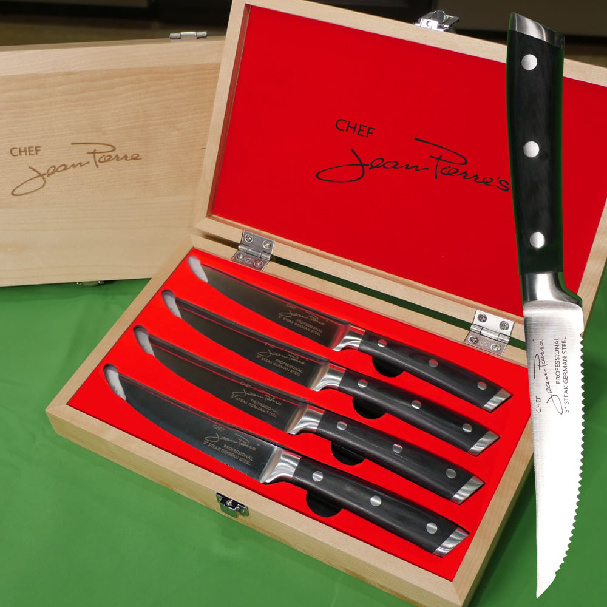
5-inch high-carbon German Stainless Steel blade will effortlessly slice through your steak, bread, vegetables, and fruits. The handle is ergonomically designed Pakka Wood. Makes a perfect gift presented in a beautifully crafted wooden box.












Simple and excellent! One suggested modification: after pitting, I macerate the cherries with a little sugar and some kirschwasser for a couple of hours.
Schnell gemacht und Geschmaklich ein Traum
Simplicity and looks fantastic