Chicken Chardonnay is a white-wine braise — the exact method of coq au vin, with Chardonnay standing in for the red.
One whole chicken (about $13–14) broken down at home feeds four, for far less than the same bird bought as pre-cut parts.
The dark meat goes into the pot roughly 10 minutes before the breast, because thighs want 165–170°F and breast is already dry there.
The sauce is finished off the heat with a little butter — that is the only way it stays creamy instead of separating into something oily.
Chicken Chardonnay: The Creamy Chardonnay Chicken I Waited 50 Years to Make
Hello friends! I have made coq au vin for 50 years, and then one day I made it with Chardonnay instead of red wine, and now I have a second favorite. Chicken Chardonnay — coq au Chardonnay, if you want to be French about it — is the same kind of deal, same kind of recipe, and I promise you it is not complicated. If it were complicated, I would not be doing it.
Everybody has been writing to me saying the same thing: Chef, we want great food, but we are not made of money. Fair enough. So I bought one chicken for about fourteen dollars, took it apart myself, and made a dinner for four out of it. In this post I will show you what this dish actually is, how it differs from the classic, the tools that matter, the mistakes that ruin it, and how to fix the sauce when it comes out thin.
What Is Chicken Chardonnay?
Chicken Chardonnay is a French chicken stew in which pieces of chicken are browned, then braised slowly in Chardonnay wine with bacon, onion, carrot, celery, and mushrooms. The Chardonnay sauce is reduced, thickened, softened with cream, and finished with butter off the heat until it clings to every piece.
What makes my version worth your Saturday is that it starts with a whole bird. Buy the chicken already cut into pieces and you pay for someone else’s knife work. Pull the legs, pop the joints, take the breasts off the bone with your fingers — a child could do this — and you have legs, thighs, wings, breasts, and tenderloins, plus a carcass for stock. The skin comes off, because skin in a braise goes soggy. Save it for the stock too.
The other differences are small and they matter. Bacon goes into the pot first so the vegetables sauté in that rendered fat. The mushrooms get quartered, never sliced, or they disappear into the sauce, and they get salted so the water comes out of them. At the very end comes a splash of cream, a little cognac, and that butter, off the heat.
Chicken Chardonnay vs. Coq au Vin: What’s the Difference?
The difference is the wine, and nothing else. Both are the same French chicken stew: chicken browned in fat, braised in wine with aromatics, sauce reduced and thickened. Red wine gives coq au vin its dark, deep, almost brooding character. Chardonnay gives you a lighter, rounder sauce that takes to cream beautifully.
Same kind of deal, same kind of recipe. I say that with love, because people get very serious about a Traditional Chicken Coq Au Vin, and cooking should not make you nervous. If you take cooking too seriously, you are on the wrong channel.
Where the white wine really earns its place is the finish. You cannot stir cream into a deep red braise without turning it a color nobody wants on a plate. With Chardonnay, the cream belongs there — it softens all the sharp edges of the acidity and gives you a creamy chicken dish that still tastes like wine and not like a cream soup. This is the version of the French chicken stew I now make when I want something a little more elegant on the table.
A Brief History of Coq au Vin (and Where Chardonnay Fits In)
Coq au vin was never fancy. It was a farmhouse solution: an old rooster, too tough to roast, cooked long and slow in wine until it surrendered. Wine did the work that time and tenderness could not.
Every wine region made its own. Burgundy is red-wine country, so the famous version is red — but Burgundy is also Chardonnay country, and where the white wine was on the table, the white wine went in the pot. Sonoma cooks arrived at the same logic from the other direction. Use the wine you have. That is the whole tradition.
What Tools Do You Need to Make Chicken Chardonnay?
Nothing exotic — but a few of these genuinely change the outcome.
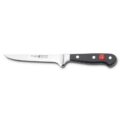
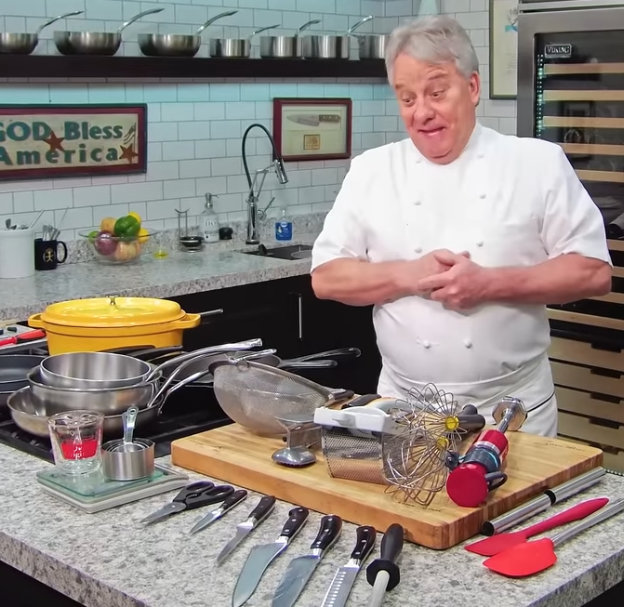
This is where your savings come from. A sharp knife finds the joint and does the work for you; force is what makes people afraid of breaking down a chicken. And clean that board properly: scrape it first to get rid of the raw chicken, then hot, hot water, and wash your hands while the water runs.
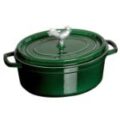
A heavy braising pot.
Forty-five minutes of gentle cooking with cream in the future means you want even heat and no hot spots. Thin pots scorch, and once something burns, the whole dish tastes burnt.
A sauté pan for searing.
Give the pieces room to brown, not steam. This is also where the Chardonnay goes to deglaze — you pour the wine into the searing pan to lift all those browned goodies off the bottom, let it reduce by half, then it all goes into the braise.
1. Cooking the Breast and the Dark Meat for the Same Amount of Time
The thighs and legs are very happy at 165–170°F. Put the breast there and it is dry — done. Give the dark meat a 10-minute head start in the pot, then add the breast and the tenderloins. Everything finishes together inside 45 minutes, and nothing is sacrificed.
2. Why Is My Chardonnay Sauce Too Thin?
Almost always because the cornstarch went into liquid that was not boiling. Cornstarch will not activate below a boil, so nothing happens, so you add more, and more, and then the sauce comes to temperature all at once and you have paste. Bring the sauce to a full boil first. Add a little slurry, wait a moment, look at it, then add a little more. A little bit at a time, always.
The sauce is right when it clings — thick enough that every bite of chicken carries some sauce with it. That is the entire purpose.
3. Finishing the Butter Over the Heat
Turn the heat off, then stir in the butter. Butter is an emulsion, and heat breaks it: instead of glossy and creamy, you get oily. Heat off, butter in, swirl. The butter fixes everything.
Bonus mistake: leaving the skin on.
In a braise it turns soggy and unpleasant. Take it off and save it for the stock.
How Should You Serve Chicken Chardonnay?
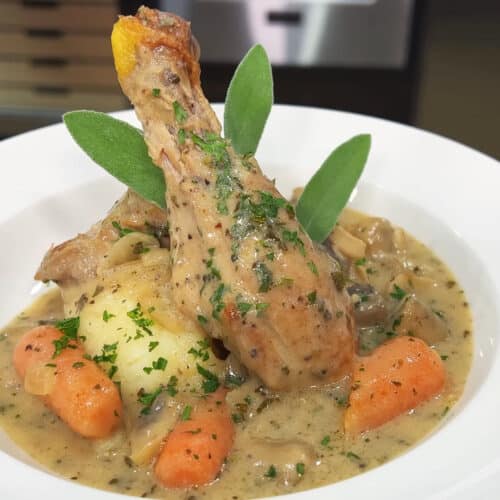
Plate a mix of white meat and dark — a piece of breast, a leg, a tenderloin — and spoon the braised carrots and mushrooms alongside. Add a few roasted potatoes, ladle over plenty of the Chardonnay sauce, and finish with fresh chopped parsley. Keep the plate clean. Then remove the bay leaf before anyone finds it.
Now the twist, and it is a small one. A little cognac goes in near the end — just a little. You do not want it in the foreground. You want it in the background, so that somebody at the table pauses and says what is that? and cannot name it. Together with the butter finish, that is what makes the sauce taste like it came from a restaurant kitchen instead of your stovetop.
What Pairs Well with Chicken Chardonnay?
Three sides that earn their place next to this dish.
Garlic Mashed Potatoes are the most direct answer to a sauce this good. You worked hard to get that Chardonnay sauce to cling, and mashed potatoes give it somewhere to pool. Every forkful picks up cream, wine, and bacon.
Garlic is the right choice over plain, too. The braise already has garlic in it — added at the very end, where it belongs — so the potatoes echo the pot instead of arguing with it. This is the pairing for a cold night and a full table.
Garlic Bread exists for one reason at this meal, and we all know what it is. When the chicken is gone and there is still sauce in the bowl, you need bread. Anybody who does not wipe the plate is not paying attention.
It also brings texture. This is a soft dish — braised chicken, tender carrots, creamy sauce — and a crisp, buttery crust gives your mouth something to push against. Serve it warm, and put more on the table than you think you need.
A fresh garden salad with vinaigrette is the one that keeps the whole meal from getting heavy. Cream and bacon are rich by design, and a sharp vinaigrette resets your palate between bites so the last piece of chicken tastes as good as the first.
In France we would serve it after the main course, not before, and I recommend you try it that way at least once. Dress it lightly — the acidity is doing a job here, so let it be tangy.
How Do You Store and Reheat Chicken Chardonnay?
Refrigerator: cool it, then store in an airtight container for 3–4 days.
Freezer: up to 3 months. Freeze it in portions so you only thaw what you plan to eat.
Reheating: low heat on the stovetop, covered, stirring gently until warmed through.
If the sauce has tightened: loosen it with a splash of chicken stock as it warms.
Never boil it hard on reheating — a sauce finished with cream and butter will break.
This is a $14 chicken that eats like a restaurant dinner. Braise it properly, respect the two temperatures, and finish the sauce with the heat off, and you will have four people at your table wondering how you did it.
This Chicken Chardonnay is another version of the classic French Coq au Vin. We brown the chicken, cook plenty of vegetables with bacon, and braise everything in Chardonnay and chicken stock. The sauce is finished with a touch of cream, Cognac, and butter, making it rich, smooth, and absolutely delicious. You can use a whole chicken and cut it yourself—it costs less, gives you several different pieces, and leaves you with bones for homemade stock. My friends, nothing complicated here!
Break down the chicken. Remove the skin, because it will become soft during braising. Separate the legs, thighs, wings, breasts, and tenderloins. Cut each breast in half so the pieces cook more evenly. Save the skin, bones, and carcass for chicken stock.
Prepare all the vegetables before you begin cooking. Quarter the mushrooms rather than slicing them so they maintain their texture during braising.
Make the slurry. Combine the Cornstarch and Water until smooth, and set it aside.
Season and Brown the Chicken
Season the Chicken generously with Salt and Black Pepper on both sides. Lightly coat each piece with Flour and shake off the excess. The Flour helps create a golden crust and gives the sauce a little body.
Heat the Olive Oil in a large skillet over medium-high heat. The oil should be approximately 365°F (185°C) before adding the Chicken. Brown the Chicken in batches without overcrowding the pan. We are developing color and flavor, not cooking the Chicken completely. Transfer the browned pieces to a plate.
Build the Base
Place the Bacon in a large Dutch oven or braising pot over medium heat. Cook until it releases its fat but does not become crisp. Remove it from the pot and reserve. It will finish cooking in the sauce.
Add the Onion to the bacon fat and cook until lightly golden. Cooking the Onion first removes some of its sharp sulfur flavor, develops its natural sweetness, and builds the foundation of the sauce.
Add the Mushrooms and season lightly with Salt. Cook until they release their water and the liquid evaporates. Removing this moisture concentrates their flavor and improves their texture.
Add the Carrots, Celery, and Bell Peppers. Continue cooking for a few minutes, allowing the vegetables to develop a little color.
Deglaze and Reduce the Chardonnay
Pour the Chardonnay into the skillet used to brown the Chicken. Scrape the bottom to release all those caramelized goodies and simmer until the wine has reduced by approximately half. Reducing the wine removes its raw alcoholic flavor and concentrates the Chardonnay.
Add the Garlic, Thyme, and Bay Leaf to the vegetables. As soon as you smell the Garlic, return the Bacon to the pot and pour in the reduced Chardonnay. Garlic cooks quickly, so we add the liquid as soon as its fragrance develops.
Add the Chicken Stock and bring the sauce to a gentle simmer. Taste carefully before adding more Salt, especially if you are using store-bought stock.
Braise the Chicken
Add the Thighs, Drumsticks, and Wings first. Cover partially and simmer gently for 10 minutes, then add the Breasts and Tenderloins. Dark meat requires more cooking time, while breast meat can become dry if it is overcooked.
Continue cooking at a gentle simmer until the Breasts reach an internal temperature of 150°F to 155°F (66°C to 68°C) and the Thighs and Drumsticks reach at least 165°F (74°C), approximately 30 to 40 minutes depending on the size of the pieces. Remove each piece as it reaches the proper temperature.
Finish the Sauce and Serve
Add the Heavy Cream, Cognac, and 2 Tablespoons of the Parsley. Remove and discard the Bay Leaf.
Stir the Cornstarch slurry again and add it gradually to the boiling sauce. Wait several seconds before adding more, because Cornstarch must come to a boil before reaching its full thickening power. The finished sauce should lightly coat the back of a spoon and cling to the Chicken.
Taste the sauce and adjust the seasoning with Salt and Black Pepper. Turn off the heat and stir in the Butter. Adding the Butter away from direct heat keeps the sauce creamy and prevents it from separating and becoming oily
Return the Chicken to the pot and bathe it in the sauce. Sprinkle with the remaining Parsley and serve immediately.
Pro-Tips
Pro-Tip: Mise en Place
Everything prepped, measured, and in place before the heat goes on. This is the lesson I have taught the longest and the one you write to me about most, thousands of you, and it is not a formality. Cooking goes wrong when you are chopping garlic while the onions are browning.Do it whenever you like — in the morning, in the afternoon, keep it in the refrigerator, then take it all out when you are ready. When the pot is hot and everything is sitting there waiting for you, you can relax. You can talk. Maybe not as much as I talk, but you can talk. That is when cooking becomes fun instead of stressful.
Bonus Pro-Tip: Onions Early, Garlic Late
Never put onions and garlic into the pan at the same time. They want opposite things. Onions need time — the longer they cook, the more sulfur escapes, and the sweeter and deeper they get. That caramelization is the backbone of the whole braise, and it cannot be rushed.Garlic is the exact opposite. The moment you smell garlic in the pan, it is giving up its fragrance, and if you do not capture it right then, it is gone. Another disappearance in my kitchen. So the onions go in early with the bacon fat, and the garlic goes in at the very end, right before the wine — and when you smell it, you move.
Chef's Notes
If you do not want to use wine, replace the Chardonnay with additional Chicken Stock. The flavor will be different, but the dish will still be delicious.
Chardonnay works well because it adds acidity and fruitiness without overwhelming the Chicken.
Bell Peppers are optional. I used them because I had them in the kitchen, and they add beautiful color.
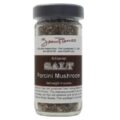
Porcini mushroom salt can replace some of the regular Salt for additional mushroom flavor.
Do not slice the Mushrooms too thinly. Thin slices can lose their texture and nearly disappear during braising.
Heavy Cream, Cognac, and Butter are finishing ingredients. They should remain subtle and support the sauce without dominating it.
Always cook Chicken according to its internal temperature rather than relying only on cooking time.
Let Me Know How Yours Turned Out
If you make this, please come back and rate the recipe ★★★★★ and leave me a comment telling me how your Chicken Chardonnay turned out. I read the comments every single day, sometimes for two hours, and I try to answer all of them.And settle the argument for me: after making it with white, are you Team Chardonnay, or are you staying loyal to the classic red-wine coq au vin? Tell me in the comments.
Equipment - You can find the items below at our online store!
Use a Chardonnay you would actually enjoy drinking — unoaked to lightly oaked, so the subtle oak does not overwhelm the sauce. You need about two cups, reduced by half before the braise begins. Do not cook with anything labeled “cooking wine.” If it is not good enough for your glass, it is not good enough for your pot.
Can you make Chicken Chardonnay without alcohol?
Yes. Replace the wine with chicken stock and skip the cognac at the end, and the dish is still very good. Worth knowing, though: in a braise this long, the alcohol cooks off entirely and disappears into the air, so the wine version is not “alcoholic” — it just tastes of wine.
How do you thicken Chardonnay sauce?
Two ways, and you use both. The flour you dredge the chicken in before browning thickens the sauce as it braises. If it is still thin at the end, bring the sauce to a boil, then whisk in a cornstarch slurry a little at a time, waiting between additions to judge the consistency.
What internal temperature should the chicken reach?
The breast should come to 150–155°F, and the thighs and legs to 165–170°F. That gap is why the dark meat goes into the pot about 10 minutes ahead of the white. Use an instant-read thermometer — this is the one place in the recipe where guessing genuinely costs you.
Do you leave the skin on the chicken?
No. Skin is wonderful when you sauté it and get real caramelization, but in a braise it sits in liquid and turns soggy. Remove it before the chicken goes into the flour. Do not throw it away, though — save it for your chicken stock, along with the carcass.
Can you use chicken breasts instead of a whole chicken?
You can, and it will still be delicious, but you lose the two best parts of the deal: the savings and the carcass for stock. If you go with breasts only, shorten the cooking time considerably and check the internal temperature early — there is no dark meat to protect you.
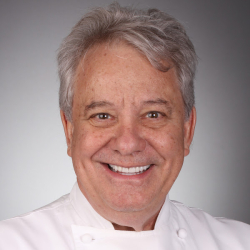
Chef Jean-Pierre, born in Aix-en-Provence, France, honed his culinary skills at a young age, mastering the art of charcuterie by the age of twelve. Determined to become a chef, he began his formal apprenticeship at L'Oustau de Baumaniere in Provence, one of the world’s best restaurants with a 3-star Michelin rating.
Jean-Pierre continued his apprenticeship on the French Riviera where he worked at famous restaurants, such as L’Oasis at La Napoule, Le Vendome in Aix-en-Provence, and the the Carlton in Cannes. In 1976, he opened The Left Bank Restaurant, consistently recognized as one of the best in America for 22 years by magazines like "Bon Appetit," "Conde Nast," "Gourmet Magazine" and "Travel & Leisure."
Jean-Pierre was also a popular TV personality, having hosted National Public Television series like "Incredible Cuisine” and "Sunshine Cuisine." He was also nominated for "Best Culinary Video" by the James Beard Foundation and operated the nationally renowned “Chef Jean-Pierre's Cooking School” and was a sought-after guest on shows like "The Today Show" and "Larry King Live."
With 2.2 Million Subscribers to his Chef Jean-Pierre YouTube Channel, he is a widely respected figure in the culinary world, known for his skill and dedication to his craft, but even more so known for making gourmet cooking fun and easy to learn.
How to Make Chicken Fricassee Chicken Fricassee is a traditional French dish that is perfect for a family dinner. And while it may seem like a complicated recipe, it…
I so love your videos.
Learning so much in my old age.
Every recipe I have prepared have my guests and children in food heaven. They also say that they would pay for the dish. Thankyou again.x
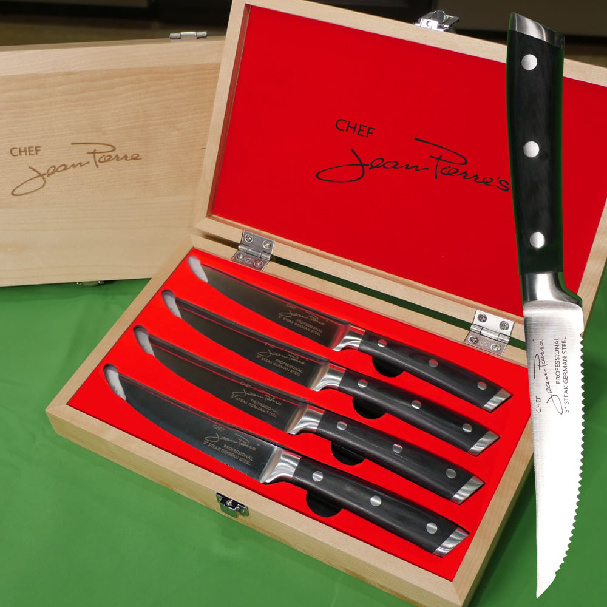
5-inch high-carbon German Stainless Steel blade will effortlessly slice through your steak, bread, vegetables, and fruits. The handle is ergonomically designed Pakka Wood. Makes a perfect gift presented in a beautifully crafted wooden box.







I so love your videos.
Learning so much in my old age.
Every recipe I have prepared have my guests and children in food heaven. They also say that they would pay for the dish. Thankyou again.x
My wife showers me with compliments and gratitude because of you and your recipes, Chef JP
Putting together simple ingredients to create a cacophony oof flavour. Well done Chef. Another fantastic tutorial.