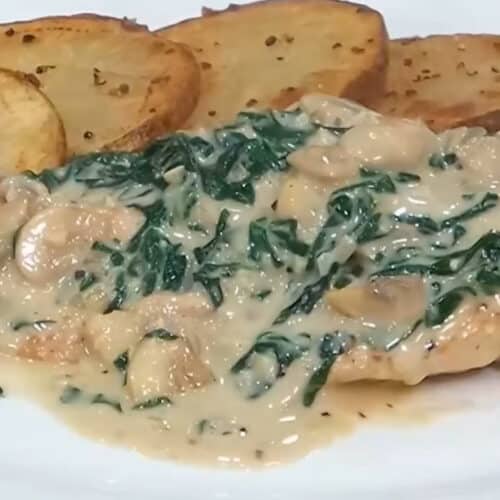
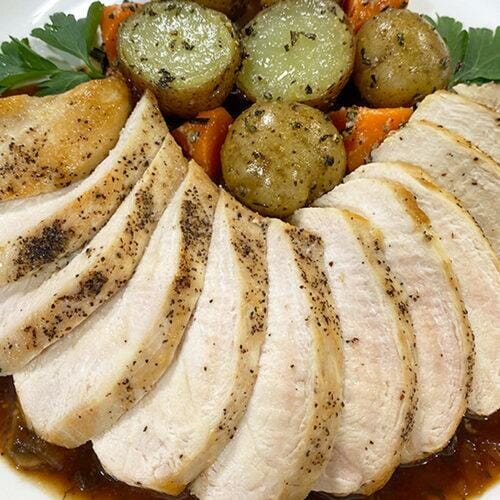
Champagne Chicken is seared chicken breast served with a creamy Champagne-Dijon sauce flavored with mushrooms, shallots, garlic, tarragon, chicken stock, cream, cheese, and butter. I lightly flour the seasoned chicken, brown it presentation-side down, and finish thick breasts gently in the oven so they remain juicy.
For my Chicken with Champagne Mustard Sauce, I season the chicken itself before flouring it. Then I build the sauce in stages, finishing with Dijon, cheese, and butter.
Champagne Chicken Worth Licking the Plate For!
Hello friends… this is my kind of chicken dish: beautiful enough for company, but simple enough for a weeknight. Golden chicken breast, creamy Champagne mustard sauce, Duchess Potatoes, and glazed carrots—simple yet elegant.
The key is good technique: juicy chicken, properly cooked mushrooms, well-reduced Champagne, and a sauce with the right texture.
Key Takeaways
This Champagne Chicken Recipe combines seared chicken breast with a creamy Champagne-Dijon sauce made with mushrooms, shallots, garlic, tarragon, cream, cheese, and butter.
For thick breasts, I sear first and finish in a 375°F / 190°C oven so the exterior does not dry out before the center cooks.
I cook mushrooms before shallots because mushrooms release lots of water and delicate shallots can burn before that moisture evaporates.
I pull the chicken around 155–160°F / 68–71°C and let carryover cooking bring it to 165°F / 74°C while it rests.
4 Common Champagne Chicken Mistakes (and How to Fix Them)
1) Why Is My Chicken Breast Dry Outside but Undercooked Inside?
Thick breasts can spend too long in a skillet. I sear for color, then finish in a 375°F / 190°C oven. If I have no oven, I slice or pound the chicken thinner. If the exterior is already darkening too quickly, I reduce the direct heat.
2) Adding Shallots Before the Mushrooms Release Their Water
Let the mushrooms release and evaporate their moisture first. Then add the shallots. If the pan is watery, keep cooking; do not rush to the next step.
3) Not Reducing the Champagne Enough
Reduce Champagne or white wine significantly before adding stock and cream. I use aroma and taste as my test: if it still smells harsh or tastes raw, it needs more reduction.
4) Overcooking the Chicken or Finishing the Sauce Incorrectly
I pull the chicken before 165°F and let carryover cooking finish it. I also add Dijon late and the final butter off heat. If the sauce becomes too thick, a small amount of cream can loosen it.
A Simple, Elegant Chicken Dinner Worth Making
This Champagne Chicken Recipe is exactly what I mean by simple yet elegant. Cook the mushrooms properly, reduce the wine, use your thermometer, and taste the sauce. Those details make the dish special.
When the mustard is present, the texture is right, and the final butter goes in off heat, the sauce is worth licking the plate for.
So, what are we waiting for? Let’s get cooking!
Recipe - Chicken Breasts in a Creamy Champagne Mustard Sauce
This elegant chicken dish is remarkably simple to prepare. The chicken breasts are seared until golden, gently finished in the oven, and served with a creamy Champagne mustard sauce made with mushrooms, shallots, tarragon, Dijon mustard, and Parmesan cheese. Serve Champagne Chicken with Duchess potatoes and maple-glazed carrots for a beautiful presentation, or keep it simple with mashed potatoes, rice, or sautéed spinach. The secret is not overcooking the chicken and reducing the Champagne properly before finishing the sauce.
Season the Chicken Breasts directly with Salt and Pepper. Dredge them lightly in the Flour and shake off any excess.Seasoning the Chicken instead of the Flour gives you better control and ensures the seasoning stays where you need it.
Heat the clarified butter or oil in an ovenproof frying pan to approximately 365°F/ 185°C.Place the Chicken Breasts in the pan with the smooth, attractive presentation side facing down. Sear until beautifully golden, then turn them over and sear the second side.
Transfer the pan to the oven and roast until the Chicken reaches an internal temperature of approximately 155–160°F / 68–71°C.Depending on the thickness of the Chicken Breasts, this may take approximately 15 to 20 minutes.Transfer the Chicken to a plate and allow it to rest. Carryover cooking will continue raising the internal temperature toward 165°F/ 74°C without unnecessarily drying out the meat.
Cook the Mushrooms
While the Chicken is cooking, prepare the sauce.Melt the butter in a separate frying pan over medium-high heat. Add the Mushrooms, season lightly with Salt and Pepper, and sauté until they release their water.Continue cooking until most of that moisture has evaporated.Do not add the Shallots at the beginning. Mushrooms contain a great deal of water, and the delicate Shallots could overcook or burn before that moisture evaporates.
Build the Champagne Sauce
Add the Shallot and cook gently until softened and fragrant.
Add the Garlic and cook only until it releases its fragrance.Stir in the fresh Tarragon.
Add the Champagne and bring it to a boil.Allow it to reduce substantially—at least by half and, if necessary, even further—until it smells and tastes pleasant rather than raw.Whether you use Champagne or regular White Wine, proper reduction is essential before adding the remaining liquids.
Add the Stock, Cream, and Thickener
Add the Chicken Stock followed by the Heavy Cream.Bring the sauce to a gentle boil and allow it to reduce slightly.
Whisk in enough Cooked Roux to give the sauce a consistency that coats the utensil rather than running like water.If you do not have Cooked Roux, you can use: * Cornstarch * Arrowroot * Tapioca Starch * Potato Starch Add the thickener gradually so you can control the final consistency.
Finish the Champagne Mustard Cream Sauce
Reduce the heat and stir in the Dijon Mustard and Parmigiano-Reggiano.The Dijon is primarily there for flavor and binding; it is not the main thickener, so there is no reason to cook it for a long time.Allow the cheese to melt into the sauce.Taste and adjust the Mustard, Salt, Pepper, Cream, and Cheese as necessary. The Mustard should be noticeably present, but the sauce should remain balanced.
Once the sauce tastes right and has the proper consistency, turn off the heat.Whisk in the finishing Butter until the sauce is smooth, glossy, and creamy.Do not boil the sauce after adding the finishing butter, or it will separate.
Rest, Slice, and Serve
Allow the Chicken to rest before slicing.This gives carryover cooking time to finish the Chicken and helps preserve its juices.Slice the rested Chicken Breasts just before plating.
Spoon the Champagne Mustard Sauce onto the plate, alongside the Chicken, or over the Chicken according to your preference.Serve with Duchess Potatoes and maple-glazed Carrots, or accompany the Chicken with Mashed Potatoes, sautéed Spinach, or your preferred vegetables and starch.
Pro-Tips
Chef Jean-Pierre’s Tips
Champagne is simply a sparkling white wine, so a dry sparkling wine or regular dry white wine will also work.
If you do not want to use alcohol, substitute additional chicken stock; it will produce a good sauce, although the flavor will be different.
Tarragon works beautifully with chicken, mustard, and Champagne; fresh sage or thyme can also be used.
Avoid rosemary in this particular sauce because it can overpower the Champagne and mustard.
Cook the mushrooms before adding the shallots so the shallots do not burn while the mushroom water evaporates.
Thick chicken breasts cook more evenly when seared first and finished in the oven.
If you do not have an oven, slice the breasts horizontally into thinner cutlets and cook them entirely in the frying pan.
The sauce, Duchess potatoes, and glazed carrots can be prepared ahead; finish the sauce with butter and cook the chicken shortly before serving.
The texture of the sauce matters because texture is the conductor of flavor.
Equipment - You can find the items below at our online store!
Champagne Chicken pairs best with sides that complement the creamy sauce or provide contrast. I especially like a potato that catches the sauce, carrots for sweetness and color, or a fresh salad that cuts through the richness. Keep the plate balanced and let the chicken and Champagne mustard cream sauce remain the stars.
For something lighter, choose one of my delicious and easy salad recipes. Crisp greens and a bright dressing balance the rich cream sauce beautifully.
Frequently Asked Questions About Champagne Chicken Answered
Can I Make Champagne Chicken Ahead of Time?
Yes. you can prepare the sauce, potatoes, and carrots in advance, which makes Champagne Chicken very convenient for entertaining. At the last minute, I recommend cooking the chicken fresh and finish the reheated sauce with butter. This protects the chicken from drying out while letting most of the supporting work happen earlier.
Can I Use Sparkling Wine Instead of Champagne?
Yes. You can use sparkling wine instead of Champagne, and regular dry white wine also works. Once it is reducing in the pan, you should care about the wine’s flavor and acidity, not the bubbles. Whatever wine you choose, reduce it until the harsh raw-wine character disappears. And remember, only cook with wine you enjoy drinking. No matter how long you cook it, bad wine is not going to get better. So stick with the good stuff!
Can I Make Champagne Chicken Without Alcohol?
Absolutely. You can replace the Champagne with chicken stock for an alcohol-free version. The flavor will be different because it will lose the character of the wine, but the dish still works. Since there is no alcohol to cook away, do not use the same wine-reduction step.
What Can I Use Instead of Tarragon?
If you do not have tarragon, sage is the best substitute for this sauce, and thyme is another good option as well. Don’t make rosemary your first choice with Champagne because it can be too assertive. Sage keeps the herbal note savory and aromatic without taking over the sauce.
Why Do the Mushrooms Go in Before the Shallots?
Mushrooms contain a lot of water, and that moisture needs time to cook away. Shallots are more delicate. If you add them at the beginning, they can overcook before the mushrooms are ready. You need sauté the mushrooms first, let their moisture reduce, and then add the shallots.
What Temperature Should Chicken Breast Be When I Take It Out?
For these thick chicken breasts, you should remove them at about 155–160°F / 68–71°C and let them rest. Carryover cooking continues raising the internal temperature toward 165°F / 74°C. This helps me avoid leaving the chicken over heat until the exterior becomes dry while the center finishes.
Do I Need Cooked Roux to Thicken the Sauce?
No. Cooked roux is convenient because the flour has already been cooked, so you can adjust the sauce near the end without a raw-flour taste. But you can also use cornstarch, arrowroot, tapioca powder, or potato starch. You simply want a smooth sauce that coats the utensil.
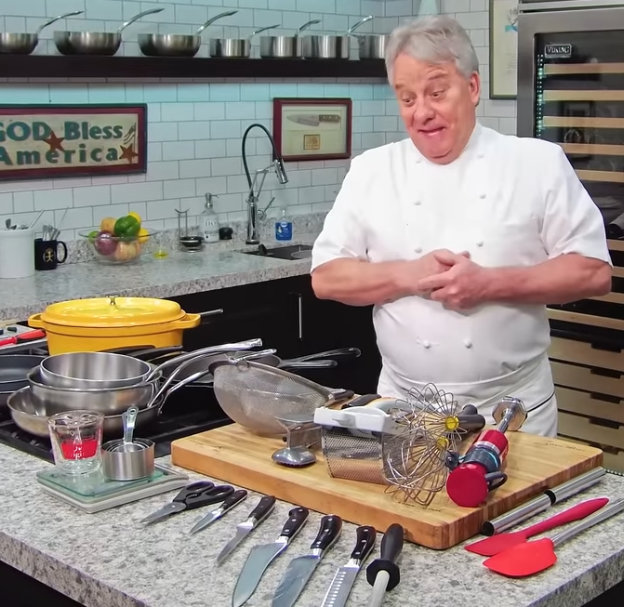
Chef Jean-Pierre, born in Aix-en-Provence, France, honed his culinary skills at a young age, mastering the art of charcuterie by the age of twelve. Determined to become a chef, he began his formal apprenticeship at L'Oustau de Baumaniere in Provence, one of the world’s best restaurants with a 3-star Michelin rating.
Jean-Pierre continued his apprenticeship on the French Riviera where he worked at famous restaurants, such as L’Oasis at La Napoule, Le Vendome in Aix-en-Provence, and the the Carlton in Cannes. In 1976, he opened The Left Bank Restaurant, consistently recognized as one of the best in America for 22 years by magazines like "Bon Appetit," "Conde Nast," "Gourmet Magazine" and "Travel & Leisure."
Jean-Pierre was also a popular TV personality, having hosted National Public Television series like "Incredible Cuisine” and "Sunshine Cuisine." He was also nominated for "Best Culinary Video" by the James Beard Foundation and operated the nationally renowned “Chef Jean-Pierre's Cooking School” and was a sought-after guest on shows like "The Today Show" and "Larry King Live."
With 2.2 Million Subscribers to his Chef Jean-Pierre YouTube Channel, he is a widely respected figure in the culinary world, known for his skill and dedication to his craft, but even more so known for making gourmet cooking fun and easy to learn.
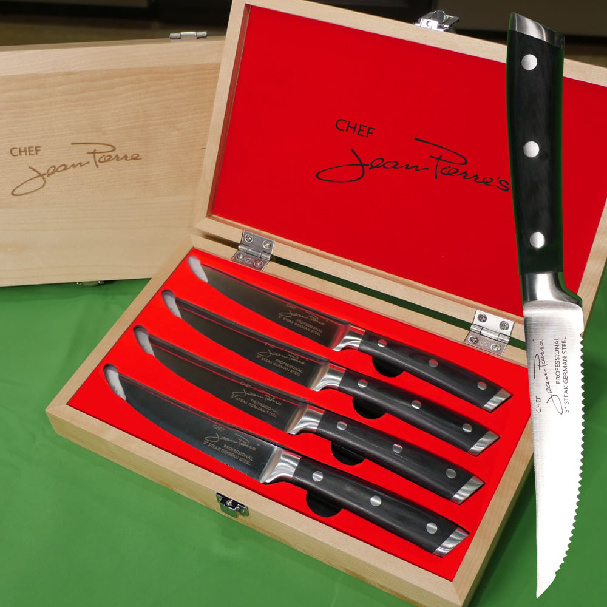
5-inch high-carbon German Stainless Steel blade will effortlessly slice through your steak, bread, vegetables, and fruits. The handle is ergonomically designed Pakka Wood. Makes a perfect gift presented in a beautifully crafted wooden box.