Hello there friends, Last year I made the Perfect Prime Rib. That recipe is absolutely delicious, if you haven't made it yet I highly recommend you do. This year I wanted to switch it up a bit, by adding a Horseradish Crust. This elevates the flavour of the Prime Rib to a whole other dimension!
7.5lbsRib RoastChef Jean-Pierre used a 3 bone-in rib roast; adjust the size based on the number of servings needed. Roughly 2 people per bone on a standing rib roast.
2 to 3tablespoonsDijon Mustard
1.5 to 2cupsBreadcrumbs Bread Crumb Recipe Below
For the Breadcrumb Crust:
2ouncesPecorino Romano If you do not have any double up on the Parmesan.
2ouncesReggiano Parmesan
1tablespoonCorn StarchIt prevents the cheese from clumping.
¼cupSundried Tomatoesmoist, not oil-packed
½cupParsleycurly or flat-leaf
2tablespoonsGarlic roughly chopped
3tablespoonsPrepared Horseradish
4 to 6slicesCountry Breadcrusts removed if desired
Get Recipe Ingredients
Prevent your screen from going dark
Recipe Instructions
Prepare the Prime Rib
Trim and Salt:
If your roast has bones, use a boning knife to carefully remove them. Ask your butcher if you're unsure. Save the bones for additional flavor during roasting.
Trim excess fat, leaving a thin layer to retain moisture. This step ensures the crust adheres properly during cooking.
Generously salt the roast all over. Place it on a rack set on a cookie sheet and refrigerate uncovered for several hours or up to 48–72 hours. This step helps the salt penetrate the meat and dries the surface for a better crust.
Preheat Oven to 250°F / 120°C
Make the Breadcrumb Crust:
Grate Pecorino Romano and Parmesan cheeses. Toss with 1 tablespoon of cornstarch to prevent clumping.
In a food processor, combine grated cheese, sun-dried tomatoes, parsley, garlic, and horseradish.
Add the bread slices, tearing them into smaller pieces if needed. Pulse until the mixture is coarse and moist.
Adjust consistency: The mixture should stick together when pressed. If it’s too dry, add a touch more horseradish or a few drops of water.
Assemble and Cook the Roast:
Remove the roast from the fridge and season with black pepper.
Spread a thin layer of Dijon mustard over the top and sides of the roast using a silicone brush.
Firmly press about 1 1/2 cups of the breadcrumb mixture onto the mustard-coated surface. Pack it in tightly to ensure it adheres. Reserve leftover breadcrumbs for future use (freeze if desired).
Lightly spray the crust with canola oil or olive oil spray to help it brown evenly.
If using the removed bones, place them in a roasting or lasagna pan. Set the roast on top.
If using the removed bones, place them in a roasting or lasagna pan. Set the roast on top.
Insert a meat thermometer into the center of the roast. Cover loosely with aluminum foil to prevent the crust from browning too quickly.
Place the roast in the oven and cook until the internal temperature reaches 118°F–120°F. This will take about 2 1/2 to 3 hours, depending on the size of the roast.
Remove from the oven and let rest for 30–45 minutes. During this time, juices will be redistributed.
Finish the Roast:
Increase oven temperature to 500°F (260°C).
Return the roast to the oven and cook for about 10–15 minutes, or until the crust is golden brown.
No additional resting is required after this step; the roast is ready to serve immediately.
Enjoy your perfectly cooked horseradish-crusted prime rib!
Pro-Tips
Pro Tips to Ensure You Achieve that Perfect Rib Roast
Salt Overnight: For best results, salt the roast the night before to enhance flavor and create a dry surface for the crust.
Thermometer Placement: Insert the thermometer into the thickest part of the roast, avoiding bones or fat pockets, for accurate temperature readings.
Reverse Sear Technique: Cooking at a low temperature first ensures even doneness with no gray banding. The high-heat finish creates a crispy, golden crust.
Cornstarch Hack: Adding cornstarch to grated cheese prevents clumping and ensures even mixing in the crust.
Resting: Allow the roast to rest after the initial low-temperature cooking phase. This ensures juicy, tender meat.
Equipment - You can find the items below at our online store!
Chef Jean-Pierre, born in Aix-en-Provence, France, honed his culinary skills at a young age, mastering the art of charcuterie by the age of twelve. Determined to become a chef, he began his formal apprenticeship at L'Oustau de Baumaniere in Provence, one of the world’s best restaurants with a 3-star Michelin rating.
Jean-Pierre continued his apprenticeship on the French Riviera where he worked at famous restaurants, such as L’Oasis at La Napoule, Le Vendome in Aix-en-Provence, and the the Carlton in Cannes. In 1976, he opened The Left Bank Restaurant, consistently recognized as one of the best in America for 22 years by magazines like "Bon Appetit," "Conde Nast," "Gourmet Magazine" and "Travel & Leisure."
Jean-Pierre was also a popular TV personality, having hosted National Public Television series like "Incredible Cuisine” and "Sunshine Cuisine." He was also nominated for "Best Culinary Video" by the James Beard Foundation and operated the nationally renowned “Chef Jean-Pierre's Cooking School” and was a sought-after guest on shows like "The Today Show" and "Larry King Live."
With over 1.8 Million Subscribers to his Chef Jean-Pierre YouTube Channel, he is a widely respected figure in the culinary world, known for his skill and dedication to his craft, but even more so known for making gourmet cooking fun and easy to learn.
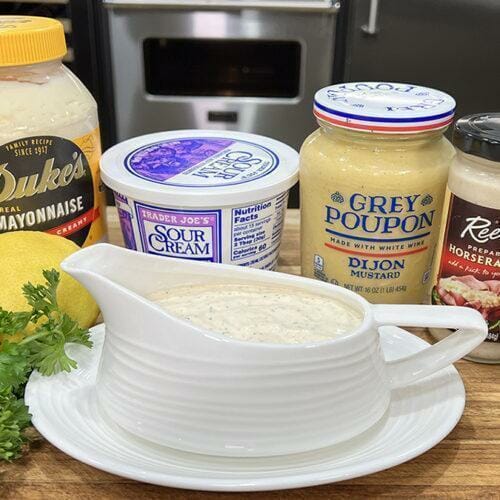
Easy to Make Horseradish Sauce Horseradish Sauce ¾ cup Mayonnaise½ cup Sour Cream or Crème Fraiche½ cup Prepared Horseradish2 tablespoons Dijon Mustard1 tablespoon White Worcestershire Sauce, Marinade for…
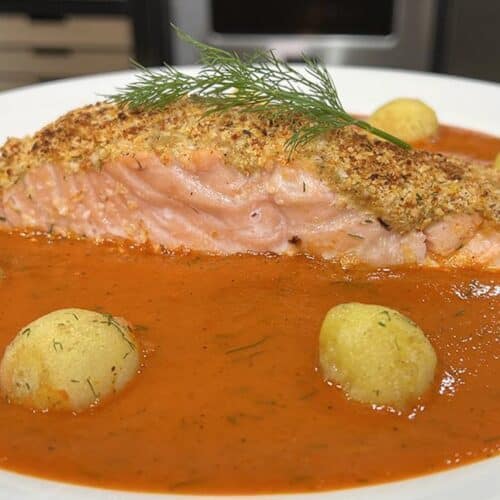
Baked Salmon Recipe with a Horseradish Crust Hello there friends, today I'm going to share with you my amazing baked salmon recipe. This was one of the most popular recipes at…
I made this for my family last night, together with your au jus and mashed potatoes. It was the best prime rib any of us have ever had, including restaurant prime rib. It was also easier and less stressful than other methods (the reverse sear approach looks bulletproof). The crust gave a very subtle flavor and removing the bones in advance made carving easy. I really appreciate the chef’s tips that are sprinkled throughout your videos; I’ve been cooking for over 50 years and learned some things I did not know (tomato paste on the bones for beef stock, corn starch when processing hard cheese).
Dave H
on December 22, 2023 at 5:17 pm
Hi Chef….I’ve watched many of your fantastic videos and learned so much thank you.
I watched ALL your veggie cuts video too!
For Xmas 2023, I’m doing. ALL your recipes as follows:
Beef Stock is made
Homemade Garlic Olive Oil
Onion (Onyo) Soup Au Gratin
Horseradish Crusted Prime Rib
Au Jus
Fondant Potato
Brussels
Asparagus
Perfect Chocolate Mousse
Optionally
Twice Baked Potatoes
You’ve reinspired me more than any other Chef on YouTube. I have spent countless hours watching your videos!
Dave
Stephanie Unger
on December 20, 2023 at 3:43 pm
Hello Chef! we made this recipe last year and it was outstanding. This year we are a much larger group of people and are looking to use a less expensive meat – if we did a strip loin roast instead, would the directions be the same?
– Should we still dry it out for 24 hours before?
– Should we still remove the fat on top (or does will this take away too much flavor from this particular cut?)
– Can we still do the reverse sear?
– Are we looking for the same internal temperature?
Just want to be sure this is all ok for a different cut of meat! Thank you
Jennifer
on February 5, 2023 at 7:03 am
Fabulous dish! The Horseradish crust adds so much flavor!
Chef Jean-Pierre
on February 10, 2023 at 11:23 am
Thank you Jennifer, it really does!
Steve F. Brettfeld
on January 2, 2023 at 6:10 pm
Fantastic recipe for prime rib. I enjoy your cooking.
Chef Jean-Pierre
on January 2, 2023 at 7:32 pm
Thank you! 😊
VEL
on December 31, 2022 at 9:21 pm
I made this…the only thing I did do was pat the meat with infused garlic olive oil…and followed the recipe along with the chef…this was so delicious…I can’t wait to make this again…
Chef Jean-Pierre
on January 1, 2023 at 5:57 pm
Thank you Vel! This is one of my favorites.
Rich
on December 31, 2022 at 9:02 pm
Made this tonight. I was perfect. Thank you for the recipe and instructions. Would definitely do this again.
Chef Jean-Pierre
on January 1, 2023 at 5:58 pm
Thank you Rich! I love this Prime Rib recipe!
Lilly
on December 27, 2022 at 11:46 am
I am making this recipe today. Can’t wait to try it!
Tubby Turkey Burger Butterman
on December 25, 2022 at 10:46 am
Merry Christmas Jean Pierre. We are cooking your horseradish prime rib roast today. 7 pounds is plenty to share. We named our new 2 pound red toy poodle after you – Little Jean Pierre! Merry Christmas and God bless you and family, mon cher ami!
Lisa R
on December 19, 2022 at 12:57 pm
Hello chef,
This sounds terrific, we plan to make it for our Christmas dinner for 17 people! A couple questions —
First, I am dry-aging (14 days) a 20-pound rib roast (using an Umai bag). I think I can skip the preliminary salt brine step because of the dry-age. Do you agree?
Second, I’d like to make the breadcrumb crust a day or two ahead and keep it in the fridge –are there any issues I should be aware of if I do that? Is that OK?
Thanks!
Chef Jean-Pierre
on December 24, 2022 at 6:28 pm
You can skip the salted brine, and make the breadcrumbs a couple day before for sure! If you have some extra freeze and use on a salmon! 😊
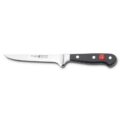
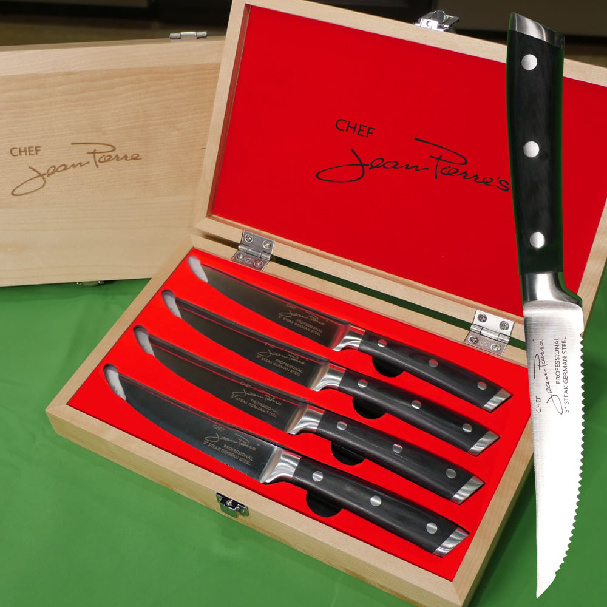
5-inch high-carbon German Stainless Steel blade will effortlessly slice through your steak, bread, vegetables, and fruits. The handle is ergonomically designed Pakka Wood. Makes a perfect gift presented in a beautifully crafted wooden box.









I made this for my family last night, together with your au jus and mashed potatoes. It was the best prime rib any of us have ever had, including restaurant prime rib. It was also easier and less stressful than other methods (the reverse sear approach looks bulletproof). The crust gave a very subtle flavor and removing the bones in advance made carving easy. I really appreciate the chef’s tips that are sprinkled throughout your videos; I’ve been cooking for over 50 years and learned some things I did not know (tomato paste on the bones for beef stock, corn starch when processing hard cheese).
Hi Chef….I’ve watched many of your fantastic videos and learned so much thank you.
I watched ALL your veggie cuts video too!
For Xmas 2023, I’m doing. ALL your recipes as follows:
Beef Stock is made
Homemade Garlic Olive Oil
Onion (Onyo) Soup Au Gratin
Horseradish Crusted Prime Rib
Au Jus
Fondant Potato
Brussels
Asparagus
Perfect Chocolate Mousse
Optionally
Twice Baked Potatoes
You’ve reinspired me more than any other Chef on YouTube. I have spent countless hours watching your videos!
Dave
Hello Chef! we made this recipe last year and it was outstanding. This year we are a much larger group of people and are looking to use a less expensive meat – if we did a strip loin roast instead, would the directions be the same?
– Should we still dry it out for 24 hours before?
– Should we still remove the fat on top (or does will this take away too much flavor from this particular cut?)
– Can we still do the reverse sear?
– Are we looking for the same internal temperature?
Just want to be sure this is all ok for a different cut of meat! Thank you
Fabulous dish! The Horseradish crust adds so much flavor!
Thank you Jennifer, it really does!
Fantastic recipe for prime rib. I enjoy your cooking.
Thank you! 😊
I made this…the only thing I did do was pat the meat with infused garlic olive oil…and followed the recipe along with the chef…this was so delicious…I can’t wait to make this again…
Thank you Vel! This is one of my favorites.
Made this tonight. I was perfect. Thank you for the recipe and instructions. Would definitely do this again.
Thank you Rich! I love this Prime Rib recipe!
I am making this recipe today. Can’t wait to try it!
Merry Christmas Jean Pierre. We are cooking your horseradish prime rib roast today. 7 pounds is plenty to share. We named our new 2 pound red toy poodle after you – Little Jean Pierre! Merry Christmas and God bless you and family, mon cher ami!
Hello chef,
This sounds terrific, we plan to make it for our Christmas dinner for 17 people! A couple questions —
First, I am dry-aging (14 days) a 20-pound rib roast (using an Umai bag). I think I can skip the preliminary salt brine step because of the dry-age. Do you agree?
Second, I’d like to make the breadcrumb crust a day or two ahead and keep it in the fridge –are there any issues I should be aware of if I do that? Is that OK?
Thanks!
You can skip the salted brine, and make the breadcrumbs a couple day before for sure! If you have some extra freeze and use on a salmon! 😊