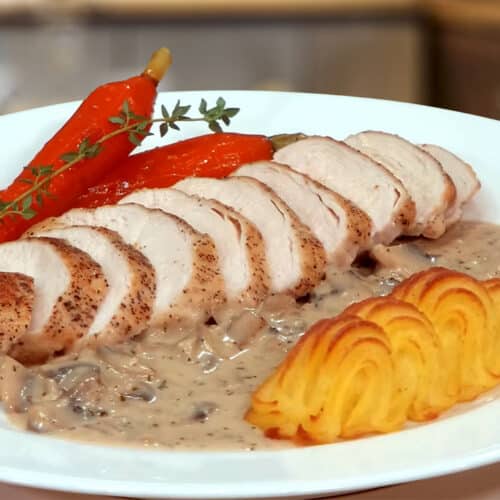
Recipe - Chicken Breasts in a Creamy Champagne Mustard Sauce

This elegant chicken dish is remarkably simple to prepare. The chicken breasts are seared until golden, gently finished in the oven, and served with a creamy Champagne mustard sauce made with mushrooms, shallots, tarragon, Dijon mustard, and Parmesan cheese. Serve Champagne Chicken with Duchess potatoes and maple-glazed carrots for a beautiful presentation, or keep it simple with mashed potatoes, rice, or sautéed spinach. The secret is not overcooking the chicken and reducing the Champagne properly before finishing the sauce.
Recipe Video
Recipe Ingredients
For the Chicken
- 2 large Chicken Breasts (24 oz / 680g)
- Salt & Pepper to taste
- ½ cup all-purpose flour (60g) for dredging
- 2 tbsp clarified butter or cooking oil (30ml)
For the Champagne Mustard Sauce
- 2 tbsp unsalted butter (28g)
- 8 oz mushrooms (225g) sliced
- Salt and freshly ground black pepper to taste
- 1 lg shallot finely chopped
- 2 tsp fresh tarragon finely chopped
- 1 cup Champagne or dry sparkling wine (240ml)
- ½ cup chicken stock (120ml)
- ½ cup heavy cream (120ml)
- 1½ tbsp Dijon mustard (22g)
- ⅓ cup freshly grated Parmigiano-Reggiano (30g)
- 1 to 2 tbsp cooked roux (15 to 30g) as needed
- 1 tbsp unsalted butter (14g) for finishing
Optional Accompaniments
- Duchess potatoes
- Maple-glazed carrots
- Mashed potatoes, rice, or sautéed spinach

Recipe Instructions
Prepare and Cook the Chicken
- Preheat the oven to 375°F / 190°C.
- Season the Chicken Breasts directly with Salt and Pepper. Dredge them lightly in the Flour and shake off any excess.Seasoning the Chicken instead of the Flour gives you better control and ensures the seasoning stays where you need it.
- Heat the clarified butter or oil in an ovenproof frying pan to approximately 365°F/ 185°C.Place the Chicken Breasts in the pan with the smooth, attractive presentation side facing down. Sear until beautifully golden, then turn them over and sear the second side.
- Transfer the pan to the oven and roast until the Chicken reaches an internal temperature of approximately 155–160°F / 68–71°C.Depending on the thickness of the Chicken Breasts, this may take approximately 15 to 20 minutes.Transfer the Chicken to a plate and allow it to rest. Carryover cooking will continue raising the internal temperature toward 165°F/ 74°C without unnecessarily drying out the meat.
Cook the Mushrooms
- While the Chicken is cooking, prepare the sauce.Melt the butter in a separate frying pan over medium-high heat. Add the Mushrooms, season lightly with Salt and Pepper, and sauté until they release their water.Continue cooking until most of that moisture has evaporated.Do not add the Shallots at the beginning. Mushrooms contain a great deal of water, and the delicate Shallots could overcook or burn before that moisture evaporates.
Build the Champagne Sauce
- Add the Shallot and cook gently until softened and fragrant.
- Add the Garlic and cook only until it releases its fragrance.Stir in the fresh Tarragon.
- Add the Champagne and bring it to a boil.Allow it to reduce substantially—at least by half and, if necessary, even further—until it smells and tastes pleasant rather than raw.Whether you use Champagne or regular White Wine, proper reduction is essential before adding the remaining liquids.
Add the Stock, Cream, and Thickener
- Add the Chicken Stock followed by the Heavy Cream.Bring the sauce to a gentle boil and allow it to reduce slightly.
- Whisk in enough Cooked Roux to give the sauce a consistency that coats the utensil rather than running like water.If you do not have Cooked Roux, you can use: * Cornstarch * Arrowroot * Tapioca Starch * Potato Starch Add the thickener gradually so you can control the final consistency.
Finish the Champagne Mustard Cream Sauce
- Reduce the heat and stir in the Dijon Mustard and Parmigiano-Reggiano.The Dijon is primarily there for flavor and binding; it is not the main thickener, so there is no reason to cook it for a long time.Allow the cheese to melt into the sauce.Taste and adjust the Mustard, Salt, Pepper, Cream, and Cheese as necessary. The Mustard should be noticeably present, but the sauce should remain balanced.
- Once the sauce tastes right and has the proper consistency, turn off the heat.Whisk in the finishing Butter until the sauce is smooth, glossy, and creamy.Do not boil the sauce after adding the finishing butter, or it will separate.
Rest, Slice, and Serve
- Allow the Chicken to rest before slicing.This gives carryover cooking time to finish the Chicken and helps preserve its juices.Slice the rested Chicken Breasts just before plating.
- Spoon the Champagne Mustard Sauce onto the plate, alongside the Chicken, or over the Chicken according to your preference.Serve with Duchess Potatoes and maple-glazed Carrots, or accompany the Chicken with Mashed Potatoes, sautéed Spinach, or your preferred vegetables and starch.
Pro-Tips
Chef Jean-Pierre’s Tips
- Champagne is simply a sparkling white wine, so a dry sparkling wine or regular dry white wine will also work.
- If you do not want to use alcohol, substitute additional chicken stock; it will produce a good sauce, although the flavor will be different.
- Tarragon works beautifully with chicken, mustard, and Champagne; fresh sage or thyme can also be used.
- Avoid rosemary in this particular sauce because it can overpower the Champagne and mustard.
- Cook the mushrooms before adding the shallots so the shallots do not burn while the mushroom water evaporates.
- Thick chicken breasts cook more evenly when seared first and finished in the oven.
- If you do not have an oven, slice the breasts horizontally into thinner cutlets and cook them entirely in the frying pan.
- The sauce, Duchess potatoes, and glazed carrots can be prepared ahead; finish the sauce with butter and cook the chicken shortly before serving.
- The texture of the sauce matters because texture is the conductor of flavor.
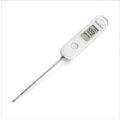
Equipment - You can find the items below at our online store!

Nutrition
Calories: 555.9kcalCarbohydrates: 11.52gProtein: 43.88gFat: 34.17gSaturated Fat: 19.38gPolyunsaturated Fat: 2.07gMonounsaturated Fat: 9.32gTrans Fat: 0.36gCholesterol: 190.82mgSodium: 452.7mgPotassium: 979.37mgFiber: 1.1gSugar: 3.34gVitamin A: 862.89IUVitamin C: 4.01mgCalcium: 153.44mgIron: 2.09mg