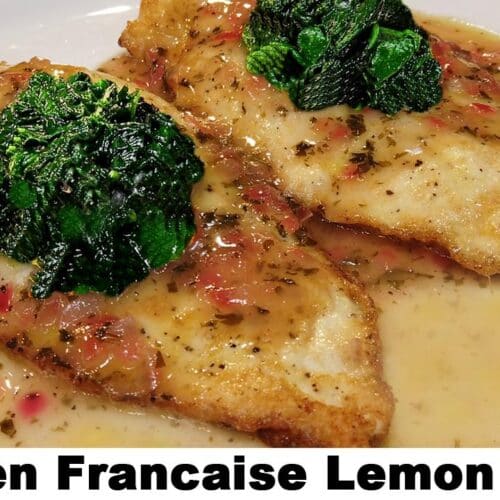
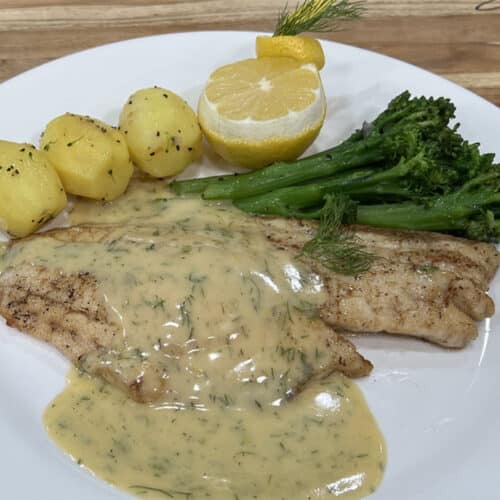
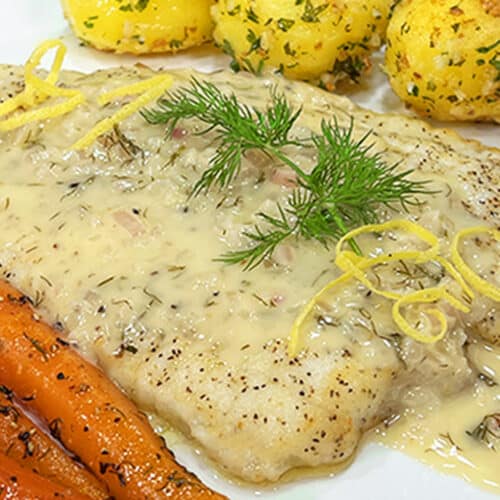
Snapper Francese (also known as Francaise) is a delicate fish version of chicken francaise. I lightly coat thin yellowtail snapper fillets in seasoned flour and egg, sauté them until golden, and serve them with a bright lemon butter sauce. The fish stays tender beneath its beautiful coating, while the sauce adds richness and fresh citrus flavor.
Why is this Snapper Francese Special?
What makes this version special is the sauce. I gently sweat shallots in butter, add fresh lemon juice and zest, a little sweet Sicilian lemon balsamic vinegar, and a splash of white wine. Then comes some parsley and a final touch of butter.
Serve it with quickly sautéed spinach and a few pretty lemon slices. And if you don’t feel like making the sauce? A simple squeeze of fresh lemon over the fish is delicious too. Cooking should be fun, my friends, not complicated!
Hello friends… I was in the mood for fish this morning, so I went to my fish market on Commercial Boulevard in Fort Lauderdale, and look what had just come in: beautiful yellowtail snapper. I wanted one right away, and I knew exactly what to do with it. Snapper Francese, the old-fashioned way, like a chicken francese but with fish.
In my 50-plus years in professional kitchens, few dishes have given me so much for so little work. You’ll learn how to spot fresh fish, why the flour goes on before the egg, and why the zest beats the juice. Never cooked fresh fish at home? Start here.
How Do You Choose the Right Fish for This Yellowtail Snapper Recipe?
Choose thin, fresh fillets of yellowtail snapper, or any similar flat fish. Check that the bloodline is bright, blood red rather than brown, and that the fish smells like the sea. Keep the fillet thin, because this method depends on a fast sauté.
If you can’t find yellowtail snapper, tilapia, pompano, sole, flounder, or any flat fish will do. Ask your fishmonger what just came in. One big fillet is dinner for one person.
3 Common Snapper Francese Mistakes (and How to Fix Them)
This is a simple dish, but three little details can make the difference between good fish and absolutely wonderful fish.
1. Why Won’t the Egg Coating Stick to My Fish?
The biggest mistake is skipping the flour. Egg doesn’t stick well to a wet fish fillet. The flour dries the surface so the egg has something to hold onto.
But don’t overdo it! Shake off the excess flour before dipping the fish into the seasoned egg. If you’ve applied too much flour, simply shake away the extra before continuing. We’re making a delicate coating, not a winter coat!
2. Why Is My Lemon Sauce Too Sharp or Too Thin?
The secret is balance. If the lemon sauce tastes too acidic, a little additional butter can soften that sharpness. If the sauce tastes flat, a touch more lemon juice can bring it back to life.
And if it’s too thin? Whisk in a small amount of cornstarch mixed with water. We want just enough body for the sauce to lightly coat the fish, not something thick enough to stand a spoon in!
3. Why Does My Snapper Turn Out Dry?
You’re probably cooking it too long or using too much heat. Thin snapper fillets need only a brief sauté to develop their beautiful golden coating.
Keep the heat moderate, then transfer the fillets to a lined sheet pan and finish them in a warm oven, around 300–325°F. Don’t forget to season the fish, flour, and egg. And taste your sauce before serving!
Now, I love old-fashioned cooking. Maybe because I’m a little old-fashioned myself! But after more than 50 years in professional kitchens, I’ve learned that some of the best dishes are also the simplest.
Today, I’ll show you how to prepare beautiful, tender snapper with a delicate golden coating and a wonderful lemon butter sauce. And my friends, it’s much easier than you might think!
Hello, friends! Today we're making a beautiful Yellowtail Snapper Francese, the old-fashioned way! Fresh snapper, lightly coated in flour and egg, sautéed in butter until golden, and finished with a delicious lemon butter sauce. A little shallots, white wine, fresh lemon zest, and just a touch of sweetness make this sauce absolutely wonderful! And we're serving it with some quickly sautéed spinach. Simple, elegant, and perfect for a dinner party! Remember, my friends, great cooking doesn't have to be complicated. Just have your mise en place ready, and let's get cooking!
4Yellowtail Snapper Filletsapproximately 6 ounces (170g) each
1cupAll-Purpose Flour125g (Approx.)
2Large Eggsbeaten
2tbspLemon-Infused Olive Oil or regular olive oil30ml
2tbspUnsalted Butter28g
Salt and Freshly Ground Black Pepperto taste
For the Lemon Butter Sauce
2tbspUnsalted Butter, for sweating the shallots28g
2tbspShallots, finely chopped - 20g
2tbspFresh Lemon Juice, plus more to taste30ml
1tbspAged Sicilian Lemon White Balsamic Vinegar (optional)15ml
1tbspLemon-Infused or regular Olive Oil (optional)15ml
Zest of 1 Lemon
3ouncesDry White Wine90ml
½cupChicken Stock or Vegetable Stock (optional, for additional sauce)120ml
1 to 2tspCornstarch, mixed with a little cold water (optional)3g to 6g
3tbspCold Unsalted Butter, to finish the sauce42g
1tbspFresh Parsley, chopped4g
Salt and Freshly Ground Black Pepperto taste
For the Sautéed Spinach
1tbspLemon-Infused Olive Oil15ml
8ozFresh Baby Spinach225g
1tbspShallots, finely chopped10g
Salt and Freshly Ground Black Pepperto taste
For Garnish
1Fresh Lemonthinly sliced
Fresh Parsleyoptional
Get Recipe Ingredients
Prevent your screen from going dark
Recipe Instructions
Prepare the Lemon Butter Sauce
In a saucepan over medium-low heat, melt the butter and add the finely chopped shallots. Sweat them gently until softened and fragrant, being careful not tobrown them.
My friends, there is something absolutely intoxicating about the smell of shallots cooking in butter! I could stand here and smell that allday. But we have dinner to make, so let's keep going!
Add the fresh lemon juice, Sicilian lemon white balsamicvinegar, and lemon-infused olive oil.
The aged lemon balsamic vinegar adds a beautiful touch of sweetness that balances the acidity of the lemon juice. If you don't have it, don't worry! Just leave it out and adjust the lemon juice to your taste. I would not substitute regular vinegar because it doesn't have that same sweet lemon flavor.
Using a microplane, zest the lemon directly into the saucepan. Remember, my friends, the lemon juice gives you acidity, but the zest is where you get that wonderful, concentrated lemon aroma!
Add the white wine and allow it to reduce gently until most of the liquid has evaporated. This concentrates the wine's flavor and softens its sharpness.
If you prefer not to use wine, substitute chicken stock or vegetable stock. You can also add a little additional stock later if you wantmore sauce, especially when cooking for a dinner party.
Keep the sauce warm over very low heat while preparing the fish.
Prepare the Yellowtail Snapper
Preheat your oven to 325°F (165°C).
Pat the snapper fillets dry with paper towels and season both sides with salt and freshly ground black pepper.
When buying fresh fish, look for firm flesh, a clean ocean aroma, and a bright, fresh appearance. Fresh fish should never have a strong, unpleasant fishy smell.
Place the flour in a shallow dish and season lightly with salt and pepper. In a separate shallow dish, beat the eggs and season them as well.
Dredge each fillet lightly in the flour, shaking off any excess.
The flour is important, my friends! It creates a dry surface so the egg can adhere properly. Without the flour, the egg coating would slide right off that beautiful fish!
Dip the floured fillets into the beaten eggs, making sure they are evenly coated on both sides.
Sauté the Fish
In a large frying pan over medium heat, warm the lemon-infused olive oil and butter.
When the butter begins to foam gently, carefully place the egg-coated snapper fillets into the pan, presentation side down first.
Remember, my friends, the pretty side always goes down first! That's the side your guests will see when you serve the fish.
Cook gently until the egg coating is lightly golden and set, approximately 2 to 3 minutes per side, depending on the thickness of the fillets.Avoid excessively high heat. We want a delicate, golden coating, not a dark crust.
This technique works beautifully with other delicate fish, such as sole, flounder, tilapia, or pompano. Just remember to adjust the cooking time according to the thickness of the fish.
Transfer the sautéed fillets to a baking sheet lined with parchment paper or a silicone baking mat.
Place the fish in the preheated oven to finish cooking, approximately 3 to 6 minutes, depending on thickness and how much it cooked in the pan. The fish should be opaque and flake easily with a fork. For food safety, the recommended internal temperature is 145°F (63°C).
For a dinner party, you can prepare the sauce and other ingredients ahead of time, then sauté and finish the fish shortly before serving.
Finish the Lemon Butter Sauce
While the fish finishes cooking, return your attention to the sauce. Add a few thin slices of lemon and the chopped parsley.
If you would like additional sauce, add a little chicken or vegetable stock and bring it to a gentle simmer.If the sauce seems too thin, stir in a very small amount of the cornstarch slurry. Start with approximately 1 teaspoon (5ml) of theprepared slurry and add more only if necessary.Remember, we're not making gravy, my friends! We want just enough body for the sauce to lightly coat the fish.
Once the sauce reaches the desired consistency, reduce the heat to very low or remove the saucepan from the heat.
Whisk in the cold butter, a little at a time, until the sauce becomes smooth, glossy, and beautifully rich.
Taste and adjust with salt, pepper, and additional lemon juice if necessary.
The secret is balance. You want the acidity of the lemon, the subtle sweetness of the balsamic, and the richness of the butter working together.If it's too acidic, a little more butter can soften the sharpness. If it needs more brightness, add another squeeze of lemon.That's cooking, my friends! Taste, adjust, and make itexactly the way you like it.
Sauté the Spinach
In a large sauté pan or wok, heat the lemon-infused olive oil over medium-high heat.
Add the fresh spinach and finely chopped shallots.
Season with salt and freshly ground black pepper.
Toss continuously until the spinach has just wilted, approximately 1 to 2 minutes.
Remove from the heat immediately.
Don't overcook it! Fresh spinach cooks incredibly quickly,and we want it tender while still maintaining its beautiful green color.
Plate and Serve
Remove the snapper from the oven and carefully transfer each fillet to a warm serving plate using a fish spatula.
Spoon the warm lemon butter sauce generously over the fish.
Arrange a few decorative lemon slices around the plate.
Add a portion of the sautéed spinach alongside or partially over the snapper.
Finish with a little fresh parsley if desired.
And voilà, my friends! A beautiful Yellowtail SnapperFrancese, prepared the old-fashioned way!Look at that delicate golden fish, the gorgeous lemon buttersauce, and that beautiful spinach. It looks like something from a finerestaurant, but you made it right in your own kitchen!And remember, if you don't want to make the sauce, a simplesqueeze of fresh lemon over beautifully sautéed snapper is delicious too.Cooking should be fun, my friends. Have everything readybefore you begin, take your time, and enjoy the process.Bon Appétit!
Pro-Tips
Chef Jean-Pierre’s Cooking Tips
Choose fresh fish: Look for firm flesh, a fresh ocean smell, and a clean, vibrant appearance.
Flour before egg: A light coating of flour helps the egg adhere to the fish and creates the characteristic Francese coating.
Presentation side first: Always place the side you intend to serve facing up into the pan first for the best appearance.
Control your heat: Moderate heat prevents the delicate egg coating from burning before the fish cooks.
Reduce the wine: Allow the white wine to reduce before adding stock or finishing the sauce with butter.
Balance your acidity: Lemon juice provides brightness, while butter and aged lemon balsamic help soften and balance the acidity.
Don't overthicken: The sauce should be light, silky, and just thick enough to coat the fish.
Cook spinach quickly: A brief sauté preserves its beautiful color and tender texture.
Prepare ahead: Have the sauce ingredients, spinach, flour, and egg station ready before cooking. Finish the fish close to serving time.
Equipment - You can find the items below at our online store!
Snapper Francese pairs beautifully with creamy potatoes, crusty garlic bread, or a fresh green salad. The buttery lemon sauce is wonderful with something that absorbs its flavor, while crisp vegetables and a light vinaigrette provide a refreshing contrast. Choose your favorite based on whether you’re planning a casual dinner or entertaining guests.
Creamy Garlic Mashed Potatoes: Comfort on Every Forkful
My Garlic Mashed Potatoes Recipe is a wonderful partner for this delicate yellowtail snapper recipe. The creamy potatoes catch every drop of that delicious lemon butter sauce.
The gentle garlic flavor complements the fish without overpowering it. Add the sautéed spinach, and you have a beautiful, satisfying dinner that feels like something special.
Homemade Garlic Bread: Don’t Waste That Sauce!
My Homemade Garlic Bread Recipe is another delicious choice. The crisp exterior and buttery garlic flavor provide a wonderful contrast to the tender fish.
And when a little lemon sauce is left on your plate, what are you going to do? Leave it there? Of course not, my friends! A piece of warm garlic bread takes care of that problem beautifully.
Fresh Garden Salad with Homemade Vinaigrette: A Light, Refreshing Balance
A simple garden salad with homemade vinaigrette brings freshness and crunch to the meal. Explore my Delicious and Easy Salad Recipes for inspiration.
The crisp vegetables and tangy vinaigrette contrast nicely with the buttery fish. It’s an especially lovely choice when you want a lighter meal or a refreshing accompaniment for a dinner party.
How Do You Store and Reheat Snapper Francese?
Store leftover Snapper Francese in an airtight container in the refrigerator for up to three days, keeping the lemon sauce separate when possible. Reheat the fish gently in a low oven to avoid drying it out. Freezing the coated fillets is not recommended because their delicate coating may become soft after thawing.
Refrigerator: Refrigerate promptly in an airtight container for up to three days.
Freezer: Avoid freezing the cooked, egg-coated fillets. The sauce can be frozen separately if necessary, although its texture may change.
Reheating: Cover the fish and warm gently in a 275–300°F oven until heated through. Warm the sauce separately over low heat and spoon it over the fish before serving. Avoid the microwave, which can toughen delicate fish.
FAQs – Snapper Francese Questions, Answered
What Fish Can You Use for Snapper Francese?
Yellowtail snapper is my favorite for this preparation, but you can also use pompano, tilapia, sole, or flounder. The important thing is choosing a relatively thin, delicate fillet that cooks quickly. Whatever fish you select, look for freshness and avoid overcooking it. This technique works beautifully with many flat fish.
Can You Make Snapper Francese Without Wine?
Absolutely! You can replace the white wine with chicken stock or vegetable stock. Both work beautifully with the shallots, lemon juice, and zest. The wine adds flavor, but it certainly isn’t essential. Use what you enjoy or already have in your kitchen. Remember, cooking should make you happy!
Can You Make Snapper Francese Ahead of Time?
Yes! That’s one of my favorite things about this dish. You can prepare and briefly sauté the fillets ahead, then refrigerate them promptly if you’re not finishing them right away. When it’s time for dinner, finish cooking them in a warm oven and serve with the prepared lemon sauce.
Why Do You Flour the Fish Before the Egg?
Flour helps dry the fish’s surface so the beaten egg can stick. Without that first light coating, the egg tends to slide off the wet fillet. You don’t need a thick layer of flour; just enough to cover the surface. Shake off the excess before dipping the fish into the egg.
Whisk in a small amount of cornstarch mixed with water if the sauce needs a little more body. You only want it slightly thickened so it coats the fish without becoming heavy. Finish with butter off the heat, then taste and adjust the balance of lemon acidity and richness.
An Old-Fashioned Fish Recipe Worth Making Again and Again
My friends, this is why I love simple, old-fashioned cooking. Beautiful fresh fish, a delicate coating, and a wonderful lemon butter sauce. Nothing fancy, nothing complicated, just delicious food prepared with a little care.
Once you’ve mastered this technique, you’ll have a fantastic way to prepare fresh fish whenever you find something beautiful at the market.
So,try this Snapper Francese recipe at home, and let me know how it turns out! Please give the recipe a ★★★★★ five-star rating if you enjoy it, and leave a comment telling me which fish you used. Was it yellowtail snapper, pompano, sole, flounder, or tilapia?/p>
Chef Jean-Pierre, born in Aix-en-Provence, France, honed his culinary skills at a young age, mastering the art of charcuterie by the age of twelve. Determined to become a chef, he began his formal apprenticeship at L'Oustau de Baumaniere in Provence, one of the world’s best restaurants with a 3-star Michelin rating.
Jean-Pierre continued his apprenticeship on the French Riviera where he worked at famous restaurants, such as L’Oasis at La Napoule, Le Vendome in Aix-en-Provence, and the the Carlton in Cannes. In 1976, he opened The Left Bank Restaurant, consistently recognized as one of the best in America for 22 years by magazines like "Bon Appetit," "Conde Nast," "Gourmet Magazine" and "Travel & Leisure."
Jean-Pierre was also a popular TV personality, having hosted National Public Television series like "Incredible Cuisine” and "Sunshine Cuisine." He was also nominated for "Best Culinary Video" by the James Beard Foundation and operated the nationally renowned “Chef Jean-Pierre's Cooking School” and was a sought-after guest on shows like "The Today Show" and "Larry King Live."
With 2.4 Million Subscribers to his Chef Jean-Pierre YouTube Channel, he is a widely respected figure in the culinary world, known for his skill and dedication to his craft, but even more so known for making gourmet cooking fun and easy to learn.
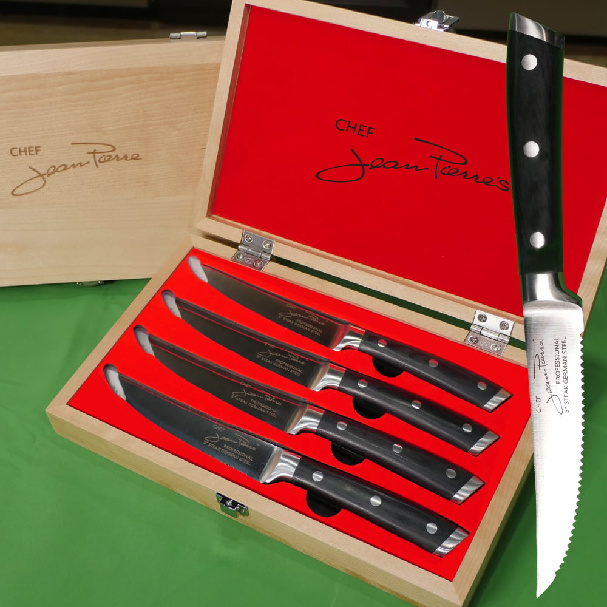
5-inch high-carbon German Stainless Steel blade will effortlessly slice through your steak, bread, vegetables, and fruits. The handle is ergonomically designed Pakka Wood. Makes a perfect gift presented in a beautifully crafted wooden box.