Easy Crème Caramel Recipe: Indulge in a Creamy Caramel Dream!
Hello friends…Today, I’m sharing with you the secrets to making the most amazing crème caramel you’ve ever tasted! We’re talking about that silky smooth texture and that rich, deep caramel flavor that just melts in your mouth.
This dessert, my friends, will have you and your guests closing your eyes and savoring every bite. I promise you, by the time we’re done here, crème caramel will become one of your top 10 desserts, if not number one!
Now, don’t worry—it’s easier to make than you think. The trick to the perfect crème caramel? It’s all in the details! I’ll walk you through every step, from preparing the caramel without those pesky bubbles to making a smooth, creamy custard that sets just right. Trust me, with these tips, you’ll be whipping up this classic French dessert like a pro in no time.
Crème Caramel: A Classic Dessert with Rich History and Unbeatable Flavor
Let’s talk about one of the greatest dessert recipes ever made—crème caramel. This classic French dessert has been around for centuries, and it’s no surprise why. It’s elegant, smooth, and absolutely delicious. But where did it come from?
You see, crème caramel or flan, as it’s also known in many countries, has its origins rooted deeply in European cuisine. It’s said that the dish dates back to ancient Rome, where early versions of custard were made. But it was the French who perfected it into the dessert we know and love today.
In France, crème caramel became a household favorite due to its simplicity and luxurious taste. Traditionally served at celebrations, it became a symbol of refined culinary skills and was often found in upscale restaurants and homes alike. And just like that, it spread across the globe, becoming known as flan in Spanish-speaking countries and even finding its way to Japanese menus!
What makes it special? The balance of that rich caramel flavor with a smooth, creamy custard—the combination of simplicity and sophistication. Whether you’re calling it flan, creme caramel, or crème caramel, one thing is clear: it’s a timeless dessert that deserves a spot in your recipe book!
How to Best Serve Crème Caramel
Alright, now that we’ve covered the history, let’s get to the fun part—eating! This dessert is best served chilled, giving the custard time to firm up and the caramel to meld perfectly with the flavors. The key is to flip it out of its mold (usually a ramekin) right before serving so that the golden caramel sauce cascades beautifully over the top.
Serve it on a small plate or shallow bowl, because you don’t want to lose any of that delicious caramel sauce! Crème caramel is often best enjoyed as it is, showcasing the contrast between the smooth custard and the rich caramel.
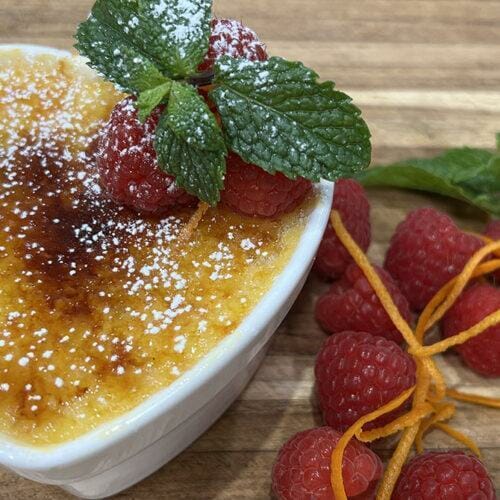
There you have it, my friends! The secrets to making the most delightful crème caramel. Whether you’re enjoying it on its own or with a simple accompaniment like fresh berries, I guarantee it’ll become a favorite in your dessert rotation. Follow these tips, take your time, and remember—it’s all about that smooth, creamy custard and deep, rich caramel flavor.
Hello friends, Crème Caramel is such an amazing dessert when made to perfection! I am going to share with you how I make my favorite dessert. Once you have tasted it, it is sooo good, it's impossible to resist. The creaminess and rich caramel make this dessert Heavenly!
Spray 4 ramekins (6 to 8 ounces) with a very light coating of non-stick spray
Make the Caramel:
Mix the sugar and water in a glass bowl until the sugar has dissolved. Add to a saucepan, heat the sugar and water on medium to low heat. The sugar will start to turn a light golden brown (approximately 10 to 12 minutes, be careful, because it will burn very quickly). As soon as it turns a dark golden brown Mahogany color), turn off the heat immediately and CAREFULLY add about 2 tablespoons water to stop the cooking process.
Pour into 4 individual custard cups. Tilt the cups to coat bottom thinly and evenly. Cool in the refrigerator 30 minutes or 15 minutes in freezer until caramel is hard.
Make the Custard:
In a sauce pan, heat the cream and milk to a boiling point (BUT NOT ROLLING BOIL) Add the sugar and mix to melt.
In a large glass bowl, mix the eggs salt and vanilla with a fork, do not use a Wisk it will create air bubbles. Add the hot milk and cream in a thin, steady stream and pour into each caramelized mold.
Set custard cups in a hot water bath, up to 3/4" from the top rim of the cups. Bake for 1hour. Take them out of the oven and when cold enough to handle remove them from the hot water and let them get to room temp for at least 3 to 4 hours. When room temperature, refrigerate at least 6 hours (much better 24 hours).
To un-mold, using a small knife or your finger to gently slide the edge of each custard cup to loosen. Place an inverted plate over each cup, turn the cup and plate upright and carefully lift the cup to see if the custard mold has loosened.
Pro-Tips
Pro-Tip: Avoid Air Bubbles in Your Custard
Here’s a secret I learned after years of making this dessert: to get the smoothest, silkiest crème caramel, it’s all about avoiding air bubbles. When you’re whisking the eggs and milk, be gentle! Don’t whisk too aggressively, as that will incorporate too much air into the mixture, and you’ll end up with an uneven texture. Just a nice, gentle mix to combine everything is all you need.
Bonus Pro-Tip: Mastering the Caramel
Now, let me tell you, making the perfect caramel is an art form in itself! One thing to remember: don’t stir the sugar and water while it’s cooking! Leave it alone! Stirring causes crystals to form, and you don’t want that. Let it cook over medium heat until it reaches that beautiful amber color we’re after. If the sides of the pot start to crystallize, just take a silicone brush and lightly brush with water to dissolve the crystals. The result will be a caramel that’s rich, smooth, and packed with flavor.
Equipment - You can find the items below at our online store!
1. What is the secret to making a smooth Crème Caramel Recipe without air bubbles?
To avoid bubbles, whisk the eggs and milk gently without incorporating too much air. Overmixing can lead to a bumpy texture. Straining the custard before baking will also help eliminate any cooked egg bits that may ruin the texture.
2. How can I make sure the caramel in my Crème Caramel Recipe doesn’t crystallize?
When making the caramel, avoid stirring it while it’s cooking. Stirring can cause sugar crystals to form. If you notice crystals forming, brush the sides of the pan with water to dissolve them.
3. What is the ideal texture for a Crème Caramel Recipe custard?
The custard should be smooth and silky. Proper mixing and tempering of the eggs and milk are key. Bake the custard until it slightly jiggles but doesn’t fully wobble—it should firm up as it cools.
4. How do I know when the caramel in my Crème Caramel Recipe is ready?
The caramel should reach a rich amber color, right before it starts to smoke. It’s essential to keep an eye on it, as there’s a fine line between perfect caramel and burnt caramel.
5. Why did my Crème Caramel Recipe taste too eggy?
Overcooking the custard can make it taste eggy. Follow the baking time closely, and avoid overbaking. A pinch of salt and the right amount of vanilla extract can also help balance the flavors.
6. How can I unmold Crème Caramel without breaking it?
After chilling, run a thin knife around the edges of the ramekin to loosen the custard. You can also place the ramekin in warm water for a few seconds to help release the caramel.
7. What do I do if the caramel in my Crème Caramel Recipe gets stuck?
If the caramel sticks to the bottom of the ramekin, place it in warm water for a minute or two to soften the caramel. This should help release it smoothly when flipped.
8. Why does my Crème Caramel Recipe have a gritty texture?
A gritty texture may occur if the custard curdles due to overbaking or excessive heat. To prevent this, use a water bath to regulate the temperature during baking, and make sure not to overcook the custard.
9. What is the best way to bake Crème Caramel?
Crème caramel is best baked in a water bath at 275°F to ensure even cooking. The water bath helps prevent the custard from overheating and curdling, giving it a smooth texture.
10. How can I make caramel for my Crème Caramel Recipe without burning it?
Heat the sugar and water on medium heat, resist the urge to stir, and wait for it to turn a deep brown. Once it reaches the desired color, immediately remove it from the heat and pour it into the ramekins.
11. Can I use condensed milk in my Crème Caramel Recipe?
While condensed milk is not traditionally used in crème caramel, some recipes, especially in Spanish flan, may include it. If you do use it, the dessert will have a thicker, richer texture.
12. How long should I chill the Crème Caramel Recipe before serving?
It’s best to chill crème caramel for at least 2–3 hours, but overnight chilling will provide the best results, allowing the custard to fully set and the flavors to develop.
13. What should I do if my Crème Caramel Recipe has air bubbles?
To avoid air bubbles in the future, strain the custard before pouring it into the ramekins, and avoid overmixing. If there are small bubbles on the surface before baking, use a paper towel to gently remove them.
14. How do I prevent the custard in my Crème Caramel Recipe from curdling?
Avoid overheating the milk and eggs. When tempering the eggs, slowly add the hot milk to prevent cooking the eggs prematurely. Baking in a water bath at a low temperature will also prevent curdling.
15. What’s the best way to serve Crème Caramel Recipe for a dinner party?
Crème caramel is best served chilled and unmolded right before serving. The glossy caramel sauce should cascade over the custard, creating an impressive presentation for guests.
16. Can I make Crème Caramel Recipe in advance?
Yes! In fact, crème caramel is best made a day ahead, as it needs time to chill and set. Just keep it in the refrigerator, covered with plastic wrap, until ready to serve.
17. How do I clean the pot after making caramel for the Crème Caramel Recipe?
Once you’ve made the caramel, pour hot water into the pot and let it sit for a few minutes to dissolve the hardened sugar. This will make it much easier to clean.
18. Can I freeze Crème Caramel Recipe?
Freezing is not recommended for crème caramel as it contains milk, which doesn’t freeze well. The texture can become grainy and less enjoyable after freezing.
19. What can I do with leftover egg whites from a Crème Caramel Recipe?
Leftover egg whites can be used in recipes like meringues, French tuiles, or even in a light almond cake. They freeze well if you want to save them for another time.
20. How do I know when the custard in my Crème Caramel Recipe is cooked?
The custard is done when it’s set but still jiggles slightly in the center. If it wobbles too much, it needs more time, but if it’s too firm, it may be overcooked.
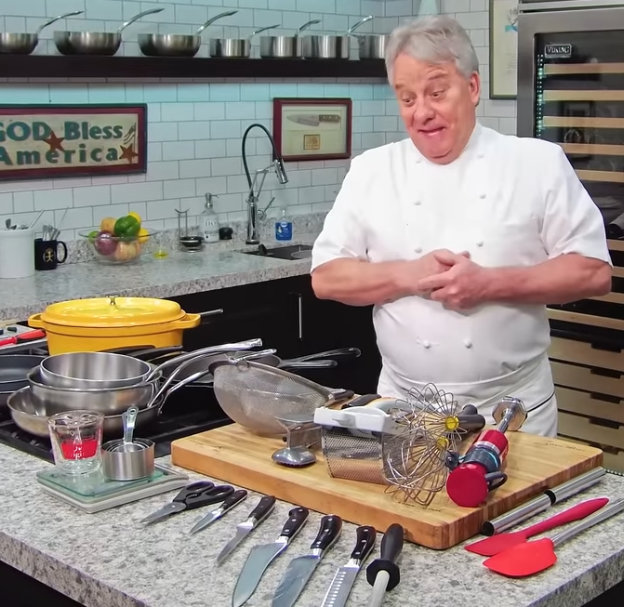
Chef Jean-Pierre, born in Aix-en-Provence, France, honed his culinary skills at a young age, mastering the art of charcuterie by the age of twelve. Determined to become a chef, he began his formal apprenticeship at L'Oustau de Baumaniere in Provence, one of the world’s best restaurants with a 3-star Michelin rating.
Jean-Pierre continued his apprenticeship on the French Riviera where he worked at famous restaurants, such as L’Oasis at La Napoule, Le Vendome in Aix-en-Provence, and the the Carlton in Cannes. In 1976, he opened The Left Bank Restaurant, consistently recognized as one of the best in America for 22 years by magazines like "Bon Appetit," "Conde Nast," "Gourmet Magazine" and "Travel & Leisure."
Jean-Pierre was also a popular TV personality, having hosted National Public Television series like "Incredible Cuisine” and "Sunshine Cuisine." He was also nominated for "Best Culinary Video" by the James Beard Foundation and operated the nationally renowned “Chef Jean-Pierre's Cooking School” and was a sought-after guest on shows like "The Today Show" and "Larry King Live."
With over 1.8 Million Subscribers to his Chef Jean-Pierre YouTube Channel, he is a widely respected figure in the culinary world, known for his skill and dedication to his craft, but even more so known for making gourmet cooking fun and easy to learn.
You are amazing ….i love every video that I have seen of your cooking .
Ericka
on April 9, 2025 at 10:06 pm
I’ve made a couple different recipes recently (both with just whole milk, eggs and egg yolks. I used a corning ware dish and cooked both in the pressure cooker (12 minutes high pressure with 10 min natural release). While delicious, they could use to be a little richer. I’m excited to try your recipe next! I’m thinking the addition of cream might be what I’m looking for. I like the ease of using the pressure cooker; have you tried that with your recipe?
Jacqueline
on February 18, 2025 at 1:17 pm
Delicious! I also tried it a few times with a bit of orange zest or lemon zest. That gives it a nice fresh taste.
One of my favorite desserts!
Thank you for sharing!
David
on February 4, 2025 at 8:41 am
This is the best Cream Caramel I’ve ever had, and it was so easy to make myself!
Thank you, Chef JP, for giving us this recipe and your easy to follow instructions.
The only thing difficult about this is patience… 🙂
Noa
on October 22, 2024 at 4:19 am
Dear Chef Jean-Pierre,
Your recipe is amazing! Thank you!
I wanted to ask about something I noticed after baking- My flan had 2 separate shades of layers. I wondered why it could be? Maybe I baked too much? I did bake a bit more than an hour until a knife came out clean from the center of the custard.
Can you please advise why it could’ve happened?
Thank you so muchh😊
Dutch in Vermont
on August 9, 2024 at 11:08 am
Good morning, Chef Jean Pierre,
I watched your video a couple of months ago and made my first ever creme caramel then, It turned out just like yours. Since then, I’ve probably made the recipe, usually doubled, maybe a dozen times. Friends who’ve I’ve made it for think I’n a culinary genius. I let ’em think that for a few minutes before I spill the beans about you, your video, and how easy it is to make it. My wife just asked if I’d make a few for tonight… she’s a cc addict. Have six in the oven as I type this. Actually, your basic recipe makes six… at least in the ramekins we have. Thanks for the recipe!
Gaby Hernandez
on July 21, 2024 at 2:27 am
I made this flan recipe today and it’s the best flan I’ve ever tasted! Amazing!
Heidi Rose
on November 28, 2023 at 5:37 pm
Thanks you so much for this wonderful recipe. My mum has stage 4 cancer and is hardly eating now but she managed to eat a whole crème caramel. It was my first time making them and it turned out as good as I could have imagined. Although I did have to throw out the first caramel as it crystallized! I increased the heat slightly the second time and voila 😋 thank you 🙏
Jeannie
on November 13, 2023 at 10:52 am
This is wonderful and also my favorite dessert.
Aruni
on July 18, 2023 at 3:02 am
Great recipe. Easy to make. It was enjoyed by everyone. Will certainly make it again. Thank you for sharing.
giulio scandale
on August 16, 2024 at 10:36 am
scusa mi potresti dare le dosi in litri invece che once ti ringrazio
Amber S Downey
on June 3, 2023 at 8:25 pm
I have tried so many of your recipes every single one is absolutely incredible! Thank you
I’ve shared 4 of them today with my neighbors at work. They all loved it.
One question: Is the bottom layer (after finished and flipped) supposed to be harder texture than the middle area? My wife commented that bottom layer was more firm like a Tofu texture while the middle was more soft.
Chef Jean-Pierre
on June 4, 2023 at 5:45 pm
Yes, It happens top me often! 😊
François
on June 21, 2023 at 3:11 pm
One of my favorite desserts as well — thank you chef!
Kevin, I’ve found that covering the ramekins with aluminum foil during cooking (and subsequent cooldown and refrigeration) will almost completely prevent that cooked layer at the bottom from forming (there can be some residual graininess, but it is a *huge* improvement over the cooked texture).
Kevin
on May 20, 2023 at 4:15 am
Another question:
If I want to make about 16 at a time, do we need to increase the baking temperature higher (325F ?) or bake for longer than 1 hour?
What is your recommendation for baking about 16 ramekins?
Chef Jean-Pierre
on June 4, 2023 at 5:51 pm
Increase the cooking time by about 15 minutes! 😊
Don Fenster
on May 3, 2023 at 8:42 pm
you are my go to chef (along with Jacque Pepin)
i always measure carefully LOL
joe
on April 24, 2023 at 9:12 pm
refrigerate at least 6 hours (much better 24 hours). covered uncovered?
Chef Jean-Pierre
on April 26, 2023 at 8:53 pm
Covered is always best! AS long as they are at room temp! 😊
Charlie
on April 5, 2023 at 8:54 am
My wife couldn’t wait. Said this is by far the best dessert she has had. She loves flan and crème brûlée without the sugar topping but they pale compared to this crème caramel.
At least she waited 3 hours after removing from the oven. The other 3 made it to the fridge overnight.
Question: Should these be served cold or can they be slightly warmed before serving?
Chef Jean-Pierre
on April 5, 2023 at 4:06 pm
Serve super cold! 😊
Richard P
on April 4, 2023 at 12:47 am
I grew up eating créme caramel… but from a box 😆. The premade powder mix with a small pouch of caramel included in there. I never dared to make it or try until I saw your video. It was truly amazing. I’m an amateur cook/recipe follower. My girlfriend is a dessert enthusiast. She said to me with a twinkle in her eye, “this is the best thing you’ve ever made.” That, my friend, was a compliment! And I was rewarded for my effort LOL. Thank you for your teaching and your informative, fun and funny show. The chocolate mousse is in the fridge. I’ll wait and see what she says about that. And I did lick the spatula haha.
Chef Jean-Pierre
on April 5, 2023 at 4:03 pm
Awesome! Comments like yours make it all worthwhile! GodSpeed! 😊
Karl Raffelsieper
on March 26, 2023 at 12:16 pm
Hi Chef, Just made a 1/2 batch using 2 8oz coffee cups. So far so good. Sure looks a bit too jiggly after an hour @ 135c for an hour, but figured as it cools to remove from water it will also set up. I had a small splash of custard left over, which was “amazing” in the coffee. Because it was a small batch, I used a small Demeyere fry pan on induction setting 3.5 and the caramel was perfect. Very excited given it’s my first try. Pre-mix the water and sugar is brilliant! Thank you for sharing all your recipes and tips. It really made it simple.
Karl Raffelsieper
on March 27, 2023 at 6:51 pm
Day after making. I could not resist trying 1 for dinner the day I made it. The results is so melt in your mouth. My experience with the coffee cup is a small issue. One the base was small and became a place the caramel didn’t want to come out of. So lesson learned. Second. As amazing as the result was, 8oz is a lot this delicious desert. Had the second one today. Fantastic and the “jiggliness” was perfect. Thank you again!
Utsuk
on April 23, 2024 at 7:43 am
It might be because chef’s oven might be a fan assisted one. There’s a 20degree difference if you use fan assisted so we would have to bake at 155 to get the same result without a fan. I’ve been trying to figure this out too since everywhere else for this recipe, it is recommended to cook at 160 but chef JP cooks at 135 so it might be the oven issue.
Grey Webb
on March 23, 2023 at 12:58 pm
Made this the other night for a dinner party of 6. It came out exactly as yours! I got rave reviews and gave you all of the credit. My wife says I have to prepare all desserts from now on. Your videos are fun to watch and I’ve learned so much from you. Thank you Chef!
Chef Jean-Pierre
on March 26, 2023 at 4:03 pm
❤️❤️❤️😊
Tim Jenkins
on March 20, 2023 at 8:12 pm
I’ve been watching your channel for a while now and I’ve learned so much. I made this crème caramel on Saturday and served it at our weekly family dinner on Sunday and it was a big hit. It was absolutely delicious…and I can’t believe how soft and creamy it was. What I really mean is I can’t believe I made something so soft and creamy. Thank you so much for all you do. I recently got your book along with your DVD’s and when work on the farm slows down I plan on watching it and learning so much more.
Carrie
on March 16, 2023 at 11:43 pm
Chef Jean, how large can you go up on the ramekins? Do they have to be small? Thank you!
Chef Jean-Pierre
on March 18, 2023 at 12:21 pm
Max 8 ounces! 😊
Ted
on March 8, 2023 at 8:21 pm
My absolute favorite dessert. I will try to make it this weekend and if it comes out half as nice as Chef’s, I will call it a success!
I know I can increase/decrease the amounts by using the recipe tool but please, please tell us how to calculate it on our own. It is one of those things Chef mentioned in the video but didn’t get around to doing.
I thank you all for these wonderful recipes and for all the hard work you put into producing them.
Chef Jean-Pierre
on March 14, 2023 at 7:26 pm
Ok Ted, it’s really simple. You need one egg per serving which is 6 to 8 ounces. The rest is really easy to calculate. Sugar and vanilla are really up to you but use the recipe above as a guideline! 😊👍
Morning chief, was just wondering if I’m to double the Sugar and White Chocolate on a Double Patch. TKS Happy Holiday’s.
Cecilia Bay
on March 7, 2023 at 8:59 pm
Love to watch your cooking show every Thursday. Learn a lot from your cooking technic.
Thank you very much. More power to you
Kit
on March 7, 2023 at 11:30 am
Hi Jean Pierre, is it possible to freeze this recipe?
Chef Jean-Pierre
on March 14, 2023 at 7:20 pm
Unfortunately, you cannot freeze a custard! 😊
Jami Barri
on March 7, 2023 at 8:21 am
Super great thank u v much for sharing us…wish u a lot of health energy and always to have fun
I am nt cooking but mostly enjoying it s realaxing for me…maybe longtime ago when I was 18,now I m 58, and needed some one to teach how to cook,after eating just choclate for a week, no one was there
Thank u v v much..
But this Cream Caramel definitly ll try…
Jami Barri
on March 7, 2023 at 8:38 am
Super great thank u v much for sharing us…wish u a lot of health energy and always to have fun
I am nt cooking but mostly enjoying it s realaxing for me…maybe longtime ago when I was 18,now I m 58, and needed some one to teach how to cook,after eating just choclate for a week, no one was there
Thank u v v much..
But this Cream Caramel definitly ll try…
Jami Barri
on March 7, 2023 at 8:39 am
Super great thank u v much for sharing us…wish u a lot of health energy and always to have fun
I am nt cooking but mostly enjoying it s realaxing for me…maybe longtime ago when I was 18,now I m 58, and needed some one to teach how to cook,after eating just choclate for a week, no one was there
Thank u v v much..
But this Cream Caramel definitly ll try…
Chef Jean-Pierre
on March 14, 2023 at 7:19 pm
Thank you! Godspeed! 😊
Sami
on December 31, 2023 at 11:46 am
Does the 1/4 cup of sugar and 2 ounces of white chocolate also double when doubling the recipe? (It didn’t change when I clicked the x2 button)
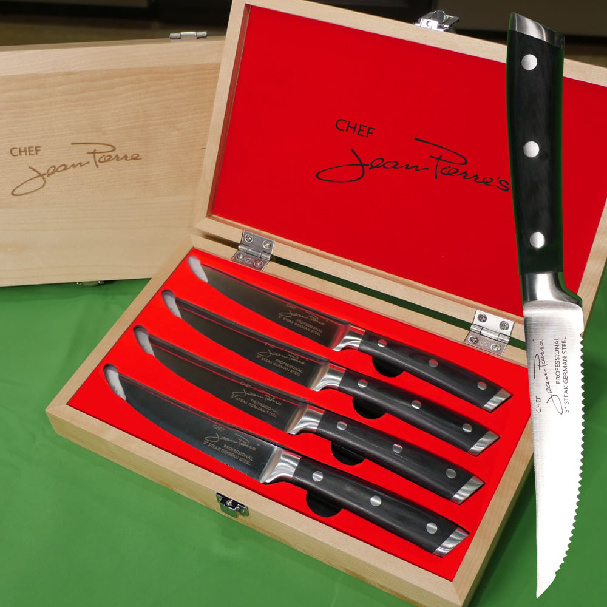
5-inch high-carbon German Stainless Steel blade will effortlessly slice through your steak, bread, vegetables, and fruits. The handle is ergonomically designed Pakka Wood. Makes a perfect gift presented in a beautifully crafted wooden box.











Love everything about this recipe
You are amazing ….i love every video that I have seen of your cooking .
I’ve made a couple different recipes recently (both with just whole milk, eggs and egg yolks. I used a corning ware dish and cooked both in the pressure cooker (12 minutes high pressure with 10 min natural release). While delicious, they could use to be a little richer. I’m excited to try your recipe next! I’m thinking the addition of cream might be what I’m looking for. I like the ease of using the pressure cooker; have you tried that with your recipe?
Delicious! I also tried it a few times with a bit of orange zest or lemon zest. That gives it a nice fresh taste.
One of my favorite desserts!
Thank you for sharing!
This is the best Cream Caramel I’ve ever had, and it was so easy to make myself!
Thank you, Chef JP, for giving us this recipe and your easy to follow instructions.
The only thing difficult about this is patience… 🙂
Dear Chef Jean-Pierre,
Your recipe is amazing! Thank you!
I wanted to ask about something I noticed after baking- My flan had 2 separate shades of layers. I wondered why it could be? Maybe I baked too much? I did bake a bit more than an hour until a knife came out clean from the center of the custard.
Can you please advise why it could’ve happened?
Thank you so muchh😊
Good morning, Chef Jean Pierre,
I watched your video a couple of months ago and made my first ever creme caramel then, It turned out just like yours. Since then, I’ve probably made the recipe, usually doubled, maybe a dozen times. Friends who’ve I’ve made it for think I’n a culinary genius. I let ’em think that for a few minutes before I spill the beans about you, your video, and how easy it is to make it. My wife just asked if I’d make a few for tonight… she’s a cc addict. Have six in the oven as I type this. Actually, your basic recipe makes six… at least in the ramekins we have. Thanks for the recipe!
I made this flan recipe today and it’s the best flan I’ve ever tasted! Amazing!
Thanks you so much for this wonderful recipe. My mum has stage 4 cancer and is hardly eating now but she managed to eat a whole crème caramel. It was my first time making them and it turned out as good as I could have imagined. Although I did have to throw out the first caramel as it crystallized! I increased the heat slightly the second time and voila 😋 thank you 🙏
This is wonderful and also my favorite dessert.
Great recipe. Easy to make. It was enjoyed by everyone. Will certainly make it again. Thank you for sharing.
scusa mi potresti dare le dosi in litri invece che once ti ringrazio
I have tried so many of your recipes every single one is absolutely incredible! Thank you
Thank you so much for this. I am going to add this to my restaurant and serve to my loyal customers.
How long does this last in the refrigerator before we serve? When do we need to throw it away?
about one week as long as your fridge are at 36/38F
I’ve shared 4 of them today with my neighbors at work. They all loved it.
One question: Is the bottom layer (after finished and flipped) supposed to be harder texture than the middle area? My wife commented that bottom layer was more firm like a Tofu texture while the middle was more soft.
Yes, It happens top me often! 😊
One of my favorite desserts as well — thank you chef!
Kevin, I’ve found that covering the ramekins with aluminum foil during cooking (and subsequent cooldown and refrigeration) will almost completely prevent that cooked layer at the bottom from forming (there can be some residual graininess, but it is a *huge* improvement over the cooked texture).
Another question:
If I want to make about 16 at a time, do we need to increase the baking temperature higher (325F ?) or bake for longer than 1 hour?
What is your recommendation for baking about 16 ramekins?
Increase the cooking time by about 15 minutes! 😊
you are my go to chef (along with Jacque Pepin)
i always measure carefully LOL
refrigerate at least 6 hours (much better 24 hours). covered uncovered?
Covered is always best! AS long as they are at room temp! 😊
My wife couldn’t wait. Said this is by far the best dessert she has had. She loves flan and crème brûlée without the sugar topping but they pale compared to this crème caramel.
At least she waited 3 hours after removing from the oven. The other 3 made it to the fridge overnight.
Question: Should these be served cold or can they be slightly warmed before serving?
Serve super cold! 😊
I grew up eating créme caramel… but from a box 😆. The premade powder mix with a small pouch of caramel included in there. I never dared to make it or try until I saw your video. It was truly amazing. I’m an amateur cook/recipe follower. My girlfriend is a dessert enthusiast. She said to me with a twinkle in her eye, “this is the best thing you’ve ever made.” That, my friend, was a compliment! And I was rewarded for my effort LOL. Thank you for your teaching and your informative, fun and funny show. The chocolate mousse is in the fridge. I’ll wait and see what she says about that. And I did lick the spatula haha.
Awesome! Comments like yours make it all worthwhile! GodSpeed! 😊
Hi Chef, Just made a 1/2 batch using 2 8oz coffee cups. So far so good. Sure looks a bit too jiggly after an hour @ 135c for an hour, but figured as it cools to remove from water it will also set up. I had a small splash of custard left over, which was “amazing” in the coffee. Because it was a small batch, I used a small Demeyere fry pan on induction setting 3.5 and the caramel was perfect. Very excited given it’s my first try. Pre-mix the water and sugar is brilliant! Thank you for sharing all your recipes and tips. It really made it simple.
Day after making. I could not resist trying 1 for dinner the day I made it. The results is so melt in your mouth. My experience with the coffee cup is a small issue. One the base was small and became a place the caramel didn’t want to come out of. So lesson learned. Second. As amazing as the result was, 8oz is a lot this delicious desert. Had the second one today. Fantastic and the “jiggliness” was perfect. Thank you again!
It might be because chef’s oven might be a fan assisted one. There’s a 20degree difference if you use fan assisted so we would have to bake at 155 to get the same result without a fan. I’ve been trying to figure this out too since everywhere else for this recipe, it is recommended to cook at 160 but chef JP cooks at 135 so it might be the oven issue.
Made this the other night for a dinner party of 6. It came out exactly as yours! I got rave reviews and gave you all of the credit. My wife says I have to prepare all desserts from now on. Your videos are fun to watch and I’ve learned so much from you. Thank you Chef!
❤️❤️❤️😊
I’ve been watching your channel for a while now and I’ve learned so much. I made this crème caramel on Saturday and served it at our weekly family dinner on Sunday and it was a big hit. It was absolutely delicious…and I can’t believe how soft and creamy it was. What I really mean is I can’t believe I made something so soft and creamy. Thank you so much for all you do. I recently got your book along with your DVD’s and when work on the farm slows down I plan on watching it and learning so much more.
Chef Jean, how large can you go up on the ramekins? Do they have to be small? Thank you!
Max 8 ounces! 😊
My absolute favorite dessert. I will try to make it this weekend and if it comes out half as nice as Chef’s, I will call it a success!
I know I can increase/decrease the amounts by using the recipe tool but please, please tell us how to calculate it on our own. It is one of those things Chef mentioned in the video but didn’t get around to doing.
I thank you all for these wonderful recipes and for all the hard work you put into producing them.
Ok Ted, it’s really simple. You need one egg per serving which is 6 to 8 ounces. The rest is really easy to calculate. Sugar and vanilla are really up to you but use the recipe above as a guideline! 😊👍
Morning chief, was just wondering if I’m to double the Sugar and White Chocolate on a Double Patch. TKS Happy Holiday’s.
Love to watch your cooking show every Thursday. Learn a lot from your cooking technic.
Thank you very much. More power to you
Hi Jean Pierre, is it possible to freeze this recipe?
Unfortunately, you cannot freeze a custard! 😊
Super great thank u v much for sharing us…wish u a lot of health energy and always to have fun
I am nt cooking but mostly enjoying it s realaxing for me…maybe longtime ago when I was 18,now I m 58, and needed some one to teach how to cook,after eating just choclate for a week, no one was there
Thank u v v much..
But this Cream Caramel definitly ll try…
Super great thank u v much for sharing us…wish u a lot of health energy and always to have fun
I am nt cooking but mostly enjoying it s realaxing for me…maybe longtime ago when I was 18,now I m 58, and needed some one to teach how to cook,after eating just choclate for a week, no one was there
Thank u v v much..
But this Cream Caramel definitly ll try…
Super great thank u v much for sharing us…wish u a lot of health energy and always to have fun
I am nt cooking but mostly enjoying it s realaxing for me…maybe longtime ago when I was 18,now I m 58, and needed some one to teach how to cook,after eating just choclate for a week, no one was there
Thank u v v much..
But this Cream Caramel definitly ll try…
Thank you! Godspeed! 😊
Does the 1/4 cup of sugar and 2 ounces of white chocolate also double when doubling the recipe? (It didn’t change when I clicked the x2 button)
Thank you!